General Description of Financial Resources Working Group
Chairperson: Philippines
Vice Chair: Solomon Islands
The Financial Resources Working Group (FRWG) is leading efforts to establish a sustainable financial architecture for CTI-CFF, ensuring long-term funding for conservation and development programs across the Coral Triangle. The FRWG ensures that this fund is properly governed, financially viable, and aligned with national and regional conservation priorities.
The FRWG facilitates collaboration among CT6 member countries and development partners to operationalize the Coral Triangle Conservation Fund (CTCF) and other sustainable financing mechanisms. This includes securing initial capital from bilateral and multilateral donors, private sector contributions, and innovative financial tools such as blended finance, payment for ecosystem services, and public-private partnerships.
The key milestones for achieving financial sustainability and stability, as outlined in RPOA 2.0, are as follows:
By 2023: Initiate at least two innovative financial options in collaboration with CT6 member countries and partners.
By 2028: Fully operationalize at least four innovative financial mechanisms, including public-private financing arrangements.
By 2030: Establish three new significant regional and international financial partnerships, along with at least two national-level partnerships per CT6 country, to secure long-term funding for conservation efforts.
Coral Triangle Conservation Fund (CTCF)
The Coral Triangle Conservation Fund (CTCF) is a regional trust fund established to provide long-term and sustainable financing for marine conservation, climate resilience, and community-based initiatives within the Coral Triangle. Designed as a financial mechanism supporting CTI-CFF’s conservation priorities, the CTCF mobilizes and manages funds from various sources. FRWG is part of the CTCF Grants Committee, responsible for nominating representatives from CT6 countries to oversee grant-making decisions.
Roles and Responsibilities
The role and responsibilities of the FRWG corresponds with the core elements / approaches
to financial resources as per the Regional Plan of Action Section V on Financial Resources
in the following tasks that are to be reported to the Council of Senior Officers and Council of
Ministers for endorsement:
Provide strategic leadership in the development, implementation, and sustainability of financial resources of CTI RPOA and other relevant programs;
Guide the Regional Secretariat to engage and establish relationships with external funding institutions for implementation of the RPOA and NPOA;
Assess funding needs, gaps and options of the RPOA and the respective Member States’ NPOAs;
Mobilize funds for NPOA and RPOA implementation and other relevant programs;
Develop and implement a sustainable CTI-CFF Financial Architecture aligned with NPOAs and RPOA;
Monitor ongoing programs funded by external funders (e.g., Development Partners, collaborators).
The FRWG members are as follows:
Country
Name / Position
Indonesia
Mr. T.B.H. Witjaksono Adji
Director for Asia-Pacific and Africa Intra-Regional and Inter-Regional Cooperation
Ministry of Foreign Affairs
Mr Raden Wisnu Sindhutrisno
Ministry of Foreign Affairs
Mr. Noor. E. Syahlani (contact point)
Ministry of Foreign Affairs
Malaysia
Dato' Mohamad Razif Abd Mubin
Deputy Secretary General
Ministry of Natural Resources, Environment and Climate Change
Papua New Guinea
Mr. Junior Hasu
Senior Analyst for the Renewable Resources Branch
Department of Treasury
Chair Philippines
Mr. Marcial C. Amaro Jr
Assistant Secretary for International Affairs and OIC-Director in Concurrent Capacity
Department of Environment and Natural Resources - Biodiversity Management Bureau
Ms. Amida P. Andres (contact point)
OIC Assistant Director, BMB and in concurrent capacity as Chief, Coastal and Marine Division BMB
Vice-Chair Solomon Islands
Ms. Ronnelle Panda
Deputy Director, Policy and Planning Division
Ministry of Fisheries and Marine Resources
Timor-Leste
Mr. Julio Da Cruz
Senior Professional of General Directorate of Fisheries, Aquaculture, and Marine Resources
Ministry of Agriculture, Livestock, Fisheries and Forestry
UPDATE ON CTI-CFF REGIONAL CONSERVATION TRUST FUND :
Date
Activity
Agenda
7 APRIL 2022
1ST STEERING COMMITTEE MEETING
TERM OF REFERENCE OF THE STEERING COMMITTEE
REVIEW OF THE CTI-CFF CONCEPT: VALUE PROPOSITION, MISSION, STRATEGY
FUNDRAISING AND DONOR ROUNDTABLE
15 JUNE 2022
2ND STEERING COMMITTEE MEETING
REPORT OF CTI-CFF PARTNERS MEETING IN BALI, 10-12 MAY 2022
COLLABORATIVE WORK WITH BLUE NATURE ALLIANCE AND MCKINSEY
UN OCEAN CONFERENCE 2022 IN LISBON, PORTUGAL
FUNDRAISING AND DONOR ROUNDTABLE
16 AUGUST 2022
3RD STEERING COMMITTEE MEETING
REPORT FROM 2022 UN OCEAN CONFERENCE IN LISBON
DISCUS ON STRATEGY/POLICY COMMITMENT
PREPARE FOR DONOR ROUNDTABLE
12 SEPTEMBER 2022
DONOR ROUNDTABLE
POSTPONED TO JAN OR FEB 2023
25 OCTOBER 2022
4TH STEERING COMMITTEE MEETING
FINALIZE STRATEGY
DISCUSS GRANT-MAKING MODALITIES
PROPOSED LEGAL STRUCTURE
NOVEMBER 2022
5TH STEERING COMMITTEE MEETING
FINALIZE GRANT-MAKING MODALITIES AND LEGAL STRUCTURE
AGREE ON BOARD SELECTION PROCESS
DISCUSS BOARD PROSPECTS
7 FEBRUARY 2023
6TH STEERING COMMITTEE MEETING
FINALIZE BOARD CANDIDATES
MAR 2023
7TH STEERING COMMITTEE MEETING
LAUNCH OF FUND
SIGNING OF LEGAL DOCUMENTS
“HAND-OFF” OF GOVERNANCE FUNCTION FROM STEERING COMMITTEE TO BOARD
FIRST BOARD MEETING
Meetings
#
Date
Location
Meeting Title
Documents
1
2-3 December 2015
Manado, INDONESIA
11th Senior Officials’ Meeting
2
1-2 November 2016
Port Moresby, PAPUA NEW GUINEA
12th Senior Officials’ Meeting
3
29 March 2017
Manila, PHILIPPINES
Financial Resources Working Group Meeting
4
18 April 2018
Jakarta, Indonesia
Financial Resources Working Group Meeting
5
12-13 December 2018
Makati City, Philippines
14th Senior Officials Meeting
6
11 February 2019
Manado, Indonesia
Financial Resources Working Group Meeting
7
7-8 November 2019
Honiara, Solomon Islands
15th Senior Officials Meeting
8
28-29 April 2020
Virtual Meeting
Financial Resources Working Group Meeting
no data in old website, need reference material's data
no photos in old website, need photos.
General Description of Internal Resources Committee Working Group
The Internal Resources Committee (IRC) serves as an oversight body within the CTI-CFF Regional Secretariat, ensuring the effective management of the organization’s internal financial and asset resources. As an independent advisory committee, it provides recommendations to the CTI Council of Senior Officers (CSO) on key financial matters, including the annual budget, internal audits, and financial policies. Its primary function is to review financial management processes and ensure that internal resources are allocated efficiently and transparently.
The committee is responsible for evaluating the Regional Secretariat’s budget proposals, monitoring financial performance, and assessing resource allocation strategies. It reviews financial reports and cost structures to ensure expenditures align with program priorities and strategic decisions made by the Council of Ministers (COM) and CSO. Additionally, the IRC ensures financial operations comply with established policies and best practices, offering recommendations for improvements where necessary. It also reviews the Regional Secretariat’s annual audit reports and assesses the financial implications of new initiatives, major projects, and organizational changes, helping to identify and address potential financial risks while safeguarding the organization’s long-term stability and sustainability.
Chair: Timor Leste
The CTI-CFF Regional Secretariat was formally established in April 2015 following a set of proposed Operational Plan and Budget approved by the Committee of Senior Officials in Special SOM 2014. The proposed Operational Plan and Budget for 2015 through to 2017 was prepared and deliberated in the Coordination Mechanism Working Group (CMWG) responsible for the planning of the establishment of a permanent Regional Secretariat. The roles of internal financial management are then taken over by the Regional Secretariat in 2015 and was the responsibility of the Executive Director who reports to the Chair of Council of Senior Officials (CTI CSO). However, it was found that there is a need for an oversight committee to review the internal financial management process and mechanism and therefore this Internal Resource Committee (IRC) is established independent of the Financial Resources Working Group (FRWG) which focuses on sourcing external funding for CTI programs.
Role and Functions
The primary role of the Internal Resource Committee (IRC) is to provide an independent review of the internal resources of the Regional Secretariat and to recommend to the CTI Council of Senior Officers (CTI CSO) the following:
Annual Budget;
Internal Audit & Acceptance of Annual Audit Report;
Policy Directions pertaining to financial and asset management.
The IRC members are as follows:
Country
Name
Chair Timor-Leste
Mr. Celestino da Cunha Barreto
Director of National Fisheries and Marine Resource Management
Ministry of Agriculture and Fisheries
Co-Chair Indonesia
Dr. Hendra Yusran Siry
Secretary, Directorate General for Marine Spatial Management
Ministry of Marine Affairs and Fisheries
Malaysia
Mme. Madam Roslinda binti Ulang
Undersecretary
Ministry of Natural Resources and Environment Sustainability
The Coral Triangle region is the epicentre of the global coral biodiversity, and home to a wide variety of marine species, including over 600 coral species, which is more than 75% of the world’s coral species, and more than 2200 species of reef fish, nearly 40% of the world’s reef fish species. The region is home to six of the world’s seven marine turtle species, including other important marine life, such as sharks, rays, whales, and dugongs.
The Threatened Species under the Coral Triangle Initiative’s program focuses on conserving and managing threatened species as defined by the International Union for Conservation of Nature IUCN Red List "any species that is vulnerable to extinction in the near future: Critically Endangered (CR), Endangered (EN), and Vulnerable (VU)", within the Coral Triangle Region. This program targets critical species, including marine turtles, sharks, rays, marine mammals, and economically important reef species, whose survival is threatened by over-fishing and unselected fishing, habitat destruction, oil spills, marine debris, wildlife trading, climate change in the Coral Triangle region.
The target of this program is by 2030, threats for the survival of all priority threatened species as identified by the CTI-CFF in the Coral Triangle are being addressed with a shared agenda across the member countries, resulting in decreasing threats and/or improving conservation status of priority threatened species.
The CTI-CFF Regional Secretariat through the Threatened Species program seeks collaborative efforts with the six member countries and aims to:
Develop and implement strategies and initiatives for addressing waste management and marine pollution in the Coral Triangle Region.
Effectively address and combat illegal wildlife trade, including increased regional collaboration and improved monitoring efforts, in the Coral Triangle region.
Establishing and managing effective migrator species (marine mammals, sea turtles, and rays) corridors in the Coral Triangle region.
As part of the coordination efforts, the Threatened Species Technical Working Group is leading the coordination and facilitation of the related activities under the RPOA 2.0. The CTI-CFF works closely with our strategic partners including the WWF – Coral Triangle Program to coordinate the implementation of the Threatened Species Program.
The members of Threatened Species Working Group from 2017 - present are as follows:
Name
Position
Email
Indonesia
Mr. M. Firdaus Agung Kunto Kurniawan (Chair)
Director for Conservation and Marine Biodiversity, Ministry of Marine Affairs and Fisheries
firda_ku@yahoo.com
Ms. Yudit Tia Lestari
Marine and Coastal Ecosystem Manager, MMAF
yudittialestari@gmail.com
Indonesia NCC Secretariat
Indonesia National Coodinationg Committee
ncc.indonesia@cticff.org
Malaysia
Mr. Bohari Haji Leng
Senior Director of Fisheries Conservation and Protection
ctimalaysia@kasa.gov.my
Mr. Azlan Md Noor
Head of Conservation, Ecosystem and Biodiversity
ctimalaysia@kasa.gov.my
Malaysia NCC Secretariat
Malaysia National Coordinating Committee
ctimalaysia@kasa.gov.my
Papua New Guinea
Mr. Vagi Rei
Manager Conservation and Environment Protection Authority (CEPA) Port Moresby, Papua New
Guinea
vrei@dec.gov.pg
Ms. Phelameya J. Haiveta
Acting Program Officer Marine Division, Sustainable Environment Programs. Conservation and
Environment Protection Authority
PHaiveta@cepa.gov.pg
Philippines
Atty. Demosthenes R. Escoto (Co-Chair)
OIC Director, Bureau Fisheries and Aquatic Resources, Department of Agriculture
ph.nccc.secretariat@gmail.com
Philippines NCC Secretariat
Philippines National Coodinating Committee
ph.nccc.secretariat@gmail.com
Solomon Islands
Paul Tua
Chief Fisheries Officer, Inshore Fisheries Division, Ministry of Fisheries and Marine
Resources.
ptua@fisheries.gov.sb
Mr. David Aram
Principal Fisheries Officer, Inshore Fisheries Division, Ministry of Fisheries and Marine
Resources
DAram@fisheries.gov.sb
Ms. Rose Babaua
Chief Conservation Officer, Ministry of Environment, Climate Change, Disaster Management and
Meteorology
N/a
Timor Leste
Mr. Benvindo Maria Deus Araujo dos Santos
Technical Staff under the Department of Conservation Marine Biodiversity, and Aquatic
Environment Management
benvindomariadeusaraujodossant@gmail.com
Mr. Fernando da Silva
Senior Technical Staff under the Department of Conservation, Marine Biodiversity and
Management of the Aquatic Environment
baiuari@yahoo.com
The previous Threatened Species Chairs and Co-Chairs are as follows:
Year
Chair
Country
Co-Chair
Country
2022 - Current
Mr. Andi Rusandi
Indonesia
Atty. Demosthenes R. Escoto
Philippines
2021 - 2022
Mr. Andi Rusandi
Indonesia
Ms. Natividad Y. Bernardino
Philippines
2018 - 2021
Mr. Vagi Rei
Papua New Guinea
Mr. Andi Rusandi
Indonesia
2016-2017
Ms. Tan Geik Hong
Malaysia
Ms. Theresa Mundita Lim
Philippines
Proposed Threatened Species Working Group Workplan for 2023 (TBC by WG):
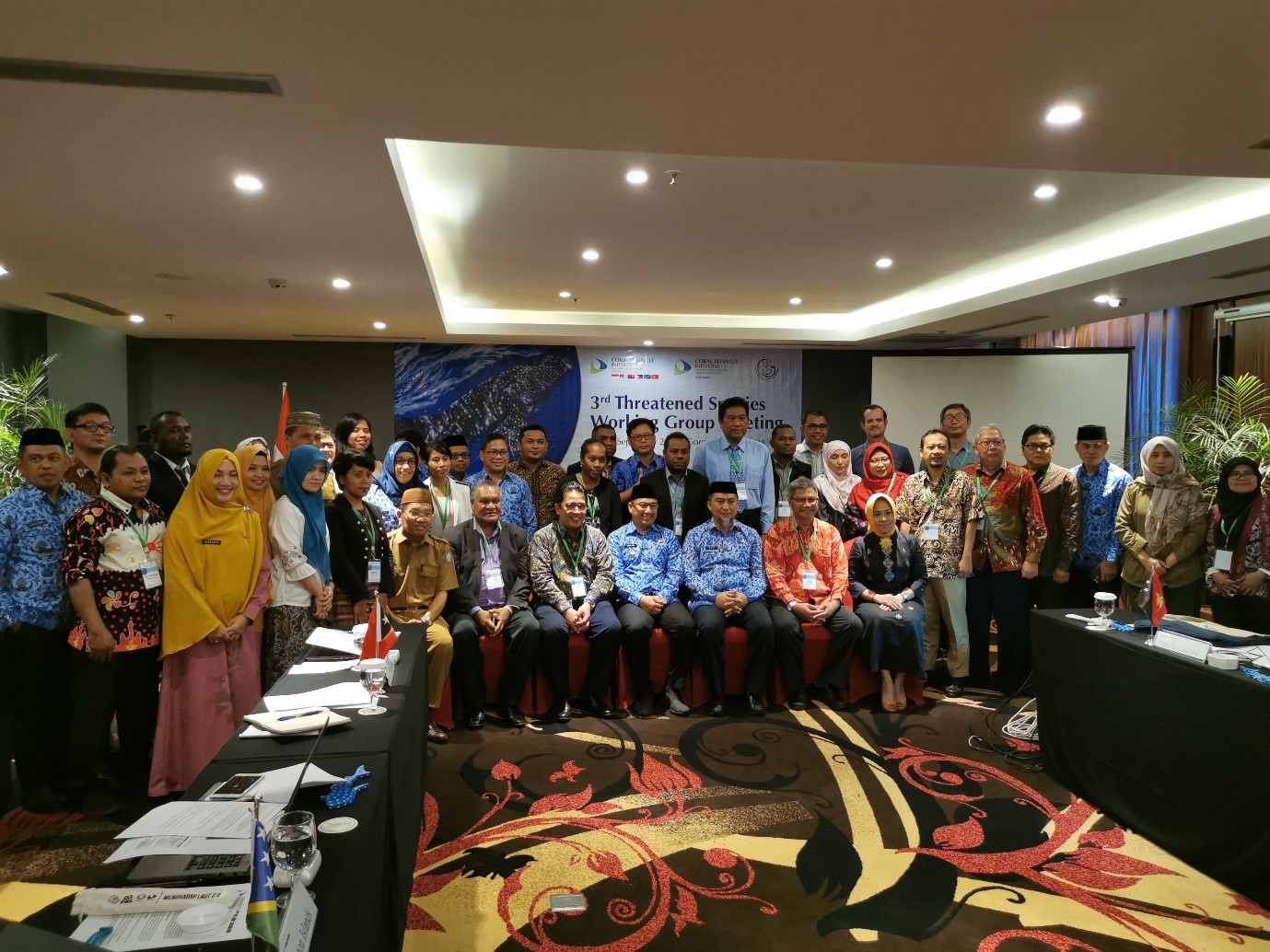
The 3rd Threatened Species Working Group Meeting
17th- 19th September 2019
Gorontalo, Indonesia
Planned Activities
Time Frame
Proposed Budget Online
4th Threatened Species working group In-Situ Online Meeting
Write-shops: (Postponed to 2024)
Draft the Framework plan for the Regional
Conservation Plan
Q2 (PH: Invitation 1-2 months prior the meeting)
USD 8,500
Targeting Regional Investigations for Policing Opportunities & Development
(TRIPOD) Project (ID, MY, PH):
Philippine government to participate in
national Counter Transnational Organized Crime (CTOC) training
NCCs participate in regional workshop and
involvement in the regional taskforce
Jan 2023
Feb/Mar 2023
Funded by TRIPOD partners
TRIPOD ongoing and scaling engagement:
NCCs and RS to meet with TRIPOD partners to
further explore opportunities for CTI CFF to host and convene a regional
counter IWT taskforce with selected national focal points , and house
TRIPOD toolkit for ongoing delivery and scaling to other CT countries,
if favorable , convene first taskforce meeting post Training.
Feb/Mar 2023 In line with TRIPOD regional event
Funded by TRIPOD partners
TRIPOD ongoing and scaling engagement:
CTI-CFF member States participate in the Asia Pacific Marine Turtle
Genetic Working Group and contribute to ShellBank, in line with CITES
turtle mandates, to collect DNA samples from wild and seized marine
turtle specimens to determine species and geographic origin in support
of research, investigations and prosecutions
CTI-CFF encourages member states to replicate the activities of the
TRIPOD project after project closure in their countries and help
disseminate the outputs of the project to inform national Legislation
On going, beyond project end Beyond project end
In part funded by ShellBank project Seek funding
Activities
#
Date
Location
Meeting Title
Meeting Documents
1
5-6 th April 2021
Jakarta, Indonesia
Training of Trainers (ToT) on MPAs and Sharks and Rays
2
17-18 th September 2019
Gorontalo, Indonesia
3rd Threatened Species Working Group Meeting
3
25-27th Feb 2019
Lombok, Indonesia
CTI Regional Training for Sharks and Rays in 2019 in conjunction with Wildlife Conservation
Society
4
26th April 2018
Quezon City, Philippines
2nd Threatened Species Working Group Meeting
5
24-26th April 2018
Quezon City, Philippines
1st CTI-CFF Threatened Species Working Group Regional Exchange
The Coral Triangle Initiative on Coastal Fisheries and Food Security (CTI-CFF) considers climate change to be a real threat to the Coral Triangle region. The six member countries of the CTI-CFF, share a deep commitment to confronting the growing impacts of climate change. Rising sea temperatures, ocean acidification, deoxygenation, and the cumulative stressors on coral reefs, mangroves, and seagrass beds threaten not only ecosystems but also the livelihoods and food security of millions of people who depend on these resources.
The CTI-CFF Regional Secretariat through the Regional Plan of Action (RPOA) 2.0 envisions a resilient Coral Triangle where coastal and marine ecosystems and the communities that depend on them can adapt to climate change and thrive. The Climate Change Adaptation (CCA) Technical Working Group plays a central role in driving this vision by providing technical inputs and recommendations to the Regional Secretariat and the National Coordinating Committees (NCCs) of the six member countries in achieving CCA-related goals that have been set forth, in the RPOA 2.0.
In 2015, the CCA Technical Working Group published the Region-wide Early Action Plan (REAP) and the Local Early Action Plan (LEAP). The REAP serves as a framework for CT6 member countries to align their actions and policies, ensuring a coordinated response to climate risks. Complementing this is the LEAP, which provides tools and strategies for integrating adaptation measures at the community level. These documents align with the broader goals in the RPOA 2.0, which emphasizes Nature-based Solutions (NbS) and Ecosystem-based Adaptation (EbA) to conserve and restore coastal habitats.
Through its initiatives, the CCA Technical Working Groups support the strengthening of community resilience to the changing climate in the Coral Triangle region. Gender Equality and Social Inclusion (GESI) are integrated into these initiatives to ensure that vulnerable groups are empowered to participate in adaptation actions. Through capacity-building and knowledge-sharing efforts, CTI-CFF fosters regional collaboration and exchange of best practices in adapting to climate change across member countries.
The members of CCA Working Group from 2018 – present are as follows:
Name
Position
Email
Indonesia
Dr.Irawan Asaad, ST., M.Sc (Chair)
Director for Climate Change Adaptation
Ministry of Environment and Forestry
Mr. Muhammad Yusuf
Director for Coastal and Small Islands Utilization
ncc.indonesia@cticff.org
Ms. Nuraieni
Deputy Director, Directorate of Climate Change Adaptation, Ministry of Environment and
Forestry, Jakarta, Indonesia
enitahir@gmail.com
Indonesia NCC Secretariat
--
ncc.indonesia@cticff.org
Malaysia
Ms. Puan Roslinda binti Ulang
Undersecretary, Environmental Management Division
Ministry of Natural Resources and Environmental Sustainability
Dr. Ejria Salleh
Borneo Marine Research Institute, Universiti Malaysia Sabah
ejsaleh@ums.edu.my
Najmuddin Jemain
Deputy Under Secretary, Ministry of Natural Resources and Environmental Sustainability
--
Malaysia NCC Secretariat
Malaysian National Coodinating Committee
ctimalaysia@kasa.gov.my
Papua New Guinea
Mr. Iki Peter
Acting Manager for Adaptation, Adaptation and Projects Division, Climate Change and Development
Authority
ikipeter64@gmail.com
Ms. Stephenie Rere
Adaptation Officer, Adaptation and Projects Division, Climate Change and Development Authority
pngctincc@gmail.com
Papua New Guinea NCC Secretariat
Papua New Guinea National Coodinating Committee
pngctincc@gmail.com
Philippines
Ms. Elenida Basug
Executive Director of DENR Climate Change Service; Support Staff , B and Mr. Albert Magalang,
DENR Climate Change Service
edrbasug@denr.gov.ph
Mr. John Erick Avelino
OIC Section Chief, Biodiversity Management Bureau DENR
Senior Climate Change Officer, Ministry of Environment, Climate Change, Disaster Management
and Meteorology
--
Timor Leste
Mr. Rui dos Reis Pires(Co-Chair)
National Director for Biodiversity, Secretary State for Environment
dos@puricasablanca.com / eveley69@yahoo.com
Mr. Junior Pascoal Carvalho
Chief of Department Fisheries and Aquaculture, Ministry of Agriculture and Fisheries, Liqisa
Municipality
junior.pascoal@yahoo.co.id
The previous Climate Change Adaptation Chairs and Co-Chairs are as follows:
Year
Chair
Country
Co-Chair
Country
2022 - 2024
Mr. Iki Peter
Papua New Guinea
Ms. Sri Tantri Arundati
Indonesia
2021 - 2022
Ms. Luanne Losi-Yawingu
Papua New Guinea
Ms. Sri Tantri Arundati
Indonesia
2020 - 2021
TBC
Philippines
Ms. Luanne Losi-Yawingu
Papua New Guinea
2019-2020
Engr. Noel Antonio V. Gerlan
Philippines
Ms. Luanne Losi-Yawingu
Papua New Guinea
2018
Dr. Nagulendran Kangayatkarasu
Malaysia
Engr. Noel Antonio V. Gerlan
Philippines
2017-2018
Captain Zaharuddin Maidin
Malaysia
Engr. Noel Antonio V. Gerlan
Philippines
2014-2017
Ms. Agnetha Vave-Karamui
Solomon Islands
National Oceanography Directorate (NOD) Ministry of Science, Technology and InnoVation (MOSTI)
Malaysia
2010-2013
Dr. Gellwynn Jusuf
Indonesia
Ms. Agnetha Vave-Karamui
Solomon Islands
In 2015, the working group published the Region-wide Early Action Plan (REAP) for CCA in the CT Region
and the Local Early Action Plan (LEAP) for CCA.
These documents were developed through a series of call meetings, REXs,
workshops and formal meetings with CCA country focal points together with development partners and other
stakeholders.
Some countries with the assistance of NGOs and partners are using the REAP and the LEAP in conducting
various CCA-related activities at the local level.
Other examples of the accomplishments of the CCA Working Group include:
Developed the Vulnerability Assessment Tools for Coastal Ecosystems
Developed the Climate Change Adaptation for Coral Triangle Communities: A guide for Vulnerability
Assessment and Local Early Action Planning
Developed the CTI-CFF Region-Wide Early Action Plan for Climate Change Adaptation
Developed the First CTI-CFF Climate Change Adaptation for Coastal Communities Course
Conducted the following Regional Exchanges:
3rd Regional Exchange of Climate Change Adaptation held in Dili, Timor Leste
2nd Regional Exchange of Climate Change Adaptation held in Honiara, Solomon Islands
CTI-CFF First Regional Exchange on Policy and Action Planning for Climate Change Adaptation
Proposed CLimate Change Adaptation Working Group Workplan for 2023:
6th Climate Change Technical Working Group Meeting
Planned Activities
Time Frame
Proposed Budget Online
7th CCA Working Group Meeting together with Regional Exchange:
Developing CEPA and Strategy for CCA
Q1-Q2
USD 8,500
Finalization of Executive Course
2nd part of the course
TBD
Support from the partner
Workshop on Conducting the vulnerability assessments to achieve Target Output
B3.1.1 By 2025, Exposure and vulnerability levels including projections on
climate change risks are established and reported through the mid-term
report in the CT Region
TBD
Support from the partner
Workshop to update and disseminate of CT6 climate change adaptation action
plans to achieve Target Output B3.1.2 By 2025, relevant existing climate
change adaptation action plans are updated, guided by current climate change
projections and technology, and disseminated within the CT region
TBD
Support from the partner
Activities
#
Date
Location
Meeting Title
Meeting Documents
1
5-6 September 2019
Manila, Philippine
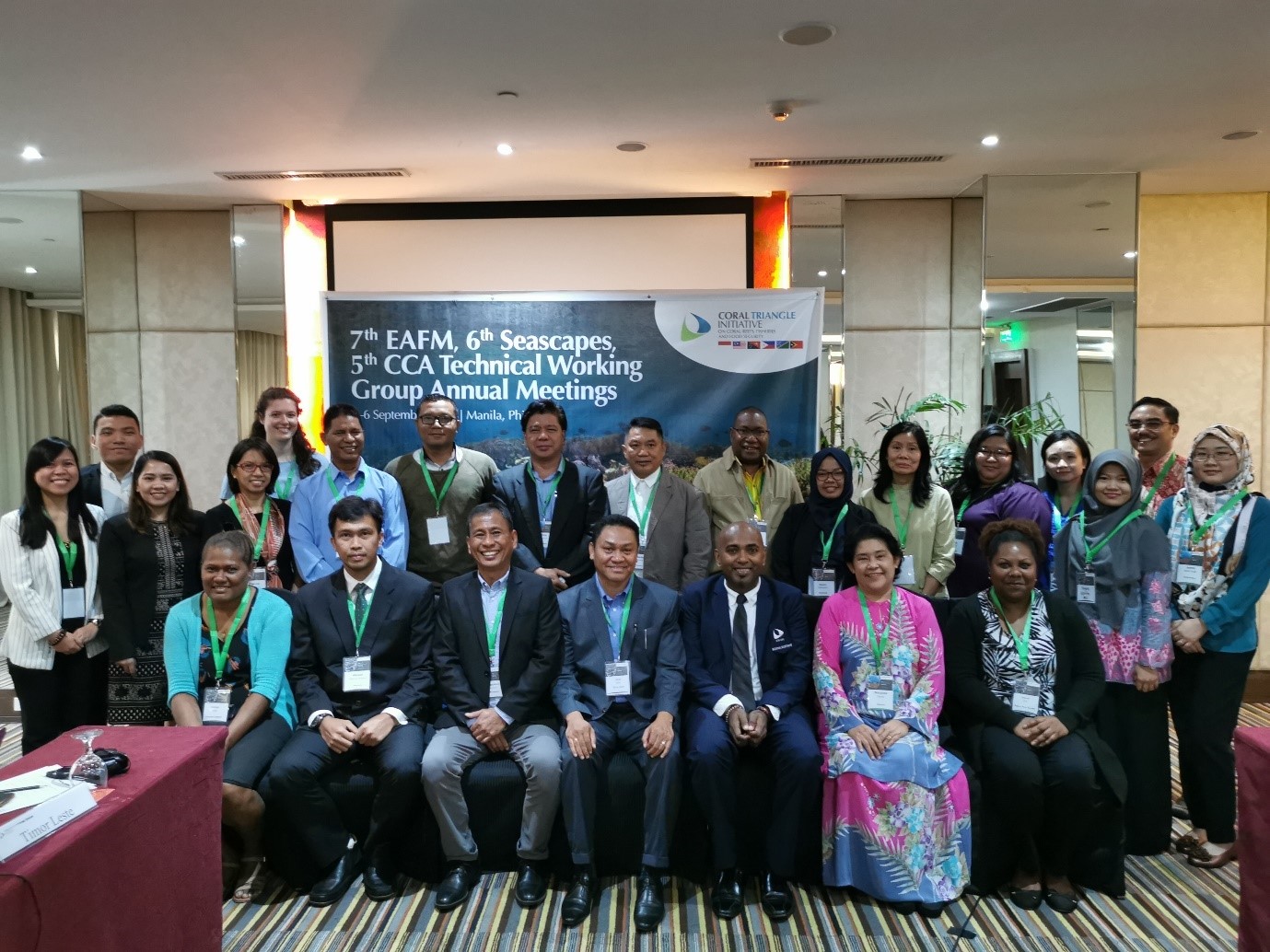
6th CTI-CFF Techincal Working Group meeting
2
10-13 April 2018
Kota Kinabalu, Sabah, Malaysia
5th CTI-CFF Regional Exchange on Climate Change Adaptation
3
26-27 September 2016
Kota Kinabalu, Sabah, Malaysia
4th CTI-CFF Regional Exchange on Climate Change Adaptation
4
29-31 May 2013
Dili, Timor Leste
3rd CTI-CFF Regional Exchange on Climate Change Adaptation
5
14-21 April 2011
Gizo and Honiara, Solomon Islands
2nd CTI-CFF Regional Exchange on Climate Change Adaptation
6
21-23 October 2010
Ancol, Jakarta, Indonesia
1st CTI-CFF Regional Exchange on Climate Change Adaptation
The Coral Triangle, often referred to as the "Amazon of the Seas," is the global epicenter of marine biodiversity. Its coral reefs provide critical ecosystem services such as fisheries, coastal protection, and tourism, benefiting over 120 million people across the region. However, these ecosystems face escalating threats from overfishing, habitat degradation, and climate change, with significant declines documented in reef health. In response, the Coral Triangle Initiative on Coral Reefs, Fisheries, and Food Security (CTI-CFF) unites six member countries under a shared vision of conservation and sustainable development.
At the core of this initiative are Marine Protected Areas (MPAs), which are essential for safeguarding marine biodiversity and maintaining ecosystem services. The International Union for Conservation of Nature (IUCN) defines MPAs as “clearly defined geographical spaces managed to achieve long-term conservation of nature with associated ecosystem services.” Complementing MPAs are Other Effective Area-based Conservation Measures (OECMs), which conserve biodiversity through sustainable management practices outside traditional MPA frameworks. Recognizing the value of OECMs expands conservation opportunities by acknowledging diverse governance models, including Indigenous and community-led initiatives, as crucial components of regional marine protection strategies. Some of the member countries are beginning to acknowledge the importance of OECMS to improve protected and conserved area monitoring and reporting towards global 30x30 goals.
The CTI-CFF Marine Protected Areas (MPA) Technical Working Group (TWG) is dedicated to establishing, managing, and evaluating MPAs across the Coral Triangle. This work focuses on creating a connected network of MPAs that conserve marine biodiversity, enhance ecosystem resilience, promote sustainable fisheries, and support local livelihoods through capacity building and scientific monitoring.
The CTMPAS Framework
The CT6 have determined that a region-wide system will be more efficient and effective than individual national systems at reducing threats across the region. The Coral Triangle Marine Protected Area System (CTMPAS) is a regional system that prioritizes and connects MPAs through a structured categorization (Category 1-4). Through the CTMPAS, the CT6 are now expanding the role of MPAs and MPA networks in the context of long-term integrated coastal resource management to build and sustain natural and social resilience to climate impacts.
In recognition of the diversity of marine area governance, MPA classifications under CTMPAS also include national and local classifications. This inclusive approach acknowledges conservation efforts beyond traditional MPAs, strengthening ecological connectivity and biodiversity protection.
To improve conservation effectiveness, the CTMPAS nomination process is undergoing revision. This revision aligns CTMPAS with the IUCN Green List Standards and integrates both biophysical and socioeconomic indicators. The inclusion of socioeconomic metrics ensures that conservation efforts benefit local communities while maintaining ecological integrity. The revised CTMPAS nomination form will enhance the evaluation of governance effectiveness, biodiversity outcomes, and community well-being, reinforcing the role of MPAs and OECMs in regional marine management.
Coral Triangle Atlas
To provide a common platform for all the countries in the Coral Triangle to share their data, and to create a growing, updated database for better marine resource management decisions and science, The Coral Triangle Atlas (CT Atlas (https://ctatlas.coraltriangleinitiative.org/) 1.0 was established since 2009 and upgraded into Version 2.0 on 2019. It serves as a real-time monitoring and visualization tool, mapping MPAs and associated ecosystems.
In 2025, national data verification for CT6 will be conducted, inviting member countries and strategic partners to validate conservation data and refine MPA and OECM classifications. This collaborative process will improve data accuracy, transparency, and regional conservation planning, reinforcing MPA connectivity and effectiveness across the Coral Triangle.
The CT Atlas also supports the nomination of CTMPAS Category 3 and 4 MPAs, ensuring alignment with global biodiversity goals, including the Kunming-Montreal Global Biodiversity Framework and the 30x30 initiative.
The members of MPA Working Group from 2019 - present are as follows:
Name
Position
Email
Indonesia
Mr. M. Firdaus Agung Kunto Kurniawan (Co-Chair)
Director of Marine Conservation and Biodiversity, Ministry of Marine Affairs and Fisheries
firda_ku@yahoo.com
Mr. Amehr Hakim
Coordinator for Marine Protected Areas Designation, Ministry of Marine Affairs and Fisheries
Chief Fisheries Officer, Ministry of Fisheries and Marine Resources Honiara, Solomon Islands
PKenilorea@fisheries.gov.sb
Mr. Trevor Maeda
Principal Conservation Officer, Environment and Conservation Division, Ministry of
Environment, Climate Change, Disaster Management and Meteorology
trevor.maeda@gmail.com
Timor Leste
Mr. Orlando Halek Kalis (Chair)
Chief of Department of Fishing Port Ministry of Agriculture and Fisheries Dili, Timor Leste
kalisorlando@gmail.com
The previous Marine Protected Areas Chairs and Co-Chairs are as follows:
Year
Chair
Country
Co-Chair
Country
2021 - current
Mr. Orlando Halek Kalis
Timor Leste
Mr. Andi Rusandi
Indonesia
2019 - 2021
Mr. Peter Husiáu’ana Kenilorea
Solomon Islands
Mr. Orlando Halek Kalis
Timor-Leste
2017 -2019
Mr. Andi Rusandi
Indonesia
Mr. Peter Husiáu’ana Kenilorea
Solomon Islands
2013- 2017
Ms. Theresa Mundita S. Lim
Philippines
Mr. Andi Rusandi
Indonesia
As of 15th Senior Officials Meeting in Honiara, Solomon Islands in 2019,
the six (6) Member Countries have reported 2,532 locally
and nationally managed Marine Protected Areas.
Table. Number of Marine Protected Areas in Coral Triangle Member Countries
CT Country
Total Numbers of MPAs 2019 (National)
Total Area of MPAS (Km²)
Contribution MPAs In CT Area
Total Area of MPAS (Km²)
Indonesia
195
226,800 Km²
117
162,600 Km²
Malaysia
65
15,100.37 km2
4 MPA (Sabah)
9,523.63 km2 (Total)
Papua New Guinea
87 (Locally Managed)
2032.17 km2
87 (Locally Managed)
2032.17 km2
Philippines
1,800+ (Locally Managed), 73(National Managed)
33825.78km2 (National Managed)
1,800+ (Locally Managed), 72 (National Managed)
33825.78km2 (National Managed)
Solomon Islands
290+ (Locally Managed 2012), 1 (National Managed)
1,819 km2
290+ (Locally Managed 2012), 1 (National Managed)
1,819 km2
Timor-Leste
22
194.63 Km²
22
194.63 Km²
Region
2532
231,195
2371
166,995
Other examples of the accomplishments of the MPA Working Group include:
The CTMPAS List of External Reviewers was finalized
Conducted the:
8th MPA Regional Exchange in Kota Kinabalu and
Kudat Malaysia
7th MPA Regional Exchange in Raja Ampat,
Indonesia
6th MPA Regional Exchange in Tubbataha,
Philippines
5th MPA Regional Exchange in Mactan Island,
Cebu Philippines
4th MPA Regional Exchange in Honiara, Solomon
Islands
3rd MPA Regional Exchange on Designing and
Supporting National and Regional Marine Protected Area System in the Coral Triangle in
Sanur, Indonesia
2nd MPA Regional Exchange on Monitoring and
Evaluation for Improving MPA Management Effectiveness in Batangas, Philippines
1st MPA Regional Exchange in Phuket, Thailand
Developed Marine Protected Area Networks in the Coral
Triangle: Good Practices for Expanding the Coral Triangle Marine Protected Area System
Established a Functional Region-Wide Coral Triangle
Marine Protected Area System
Completed the Coral Triangle Marine Protected Area
System framework and Action Plan
Conducted the Coral Triangle Atlas Meeting held in
Penang, Malaysia in 2013
Conducted the Regional Exchange on Developing Marine
Protected Area Management Effectiveness Protocol to support the Coral Triangle Marine Protected Area
System
Developed Marine Protected Area Networks to Achieve
Fisheries, Biodiversity and Climate Change Objectives in Tropical Ecosystems – a practitioner guide
Developed Biophysical principles for designing
resilient networks of Marine Protected Areas to Integrate Fisheries, Biodiversity and Climate Change
objectives in the Coral Triangle
Developed Marine Protected Area Management
Effectiveness Assessment Tool
For 2023, the MPA working group has identified the following (potential) activities:
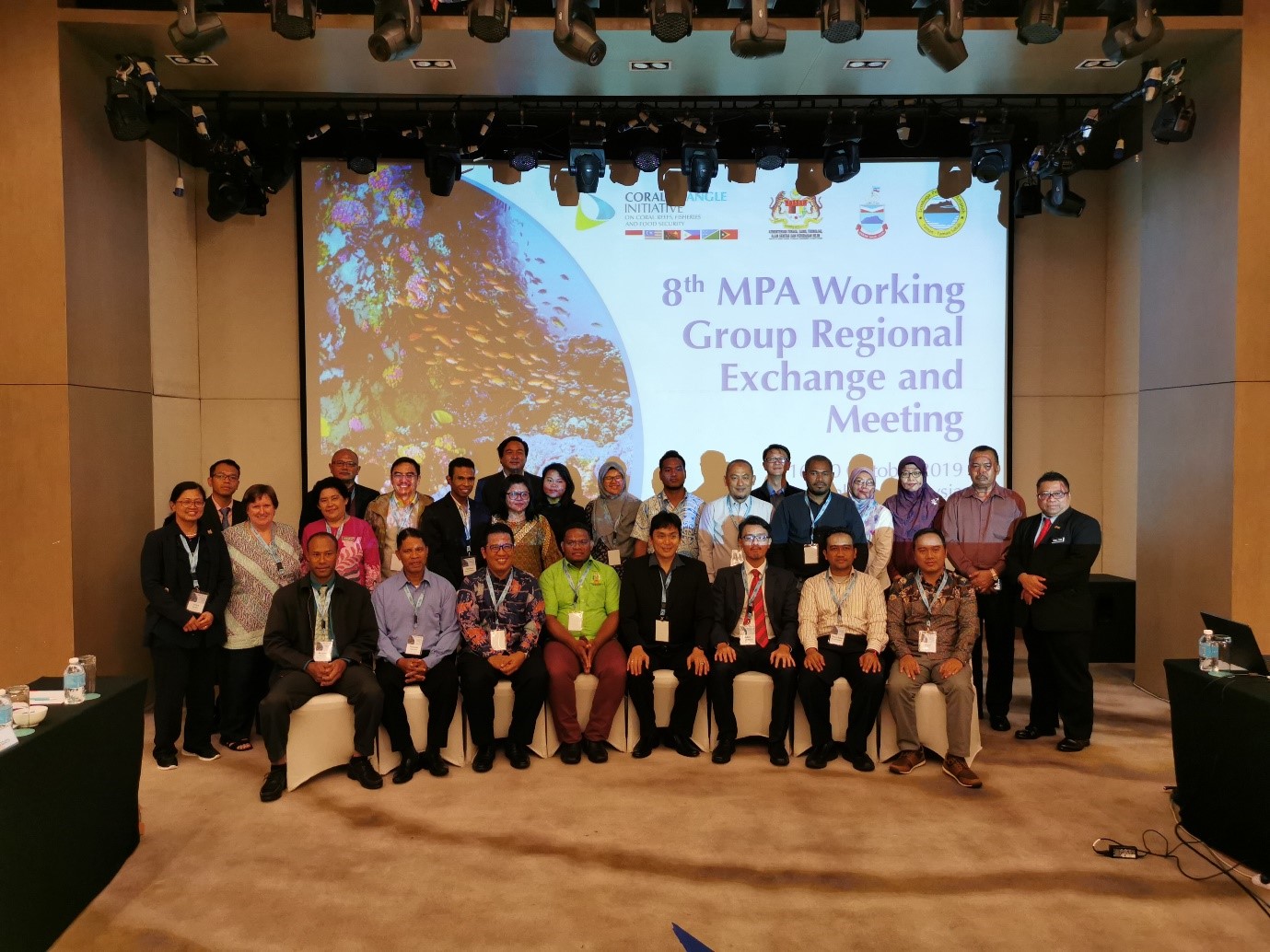
8th MPA Working Group Regional Exchange and Meeting in Kota Kinabalu and Kudat Sabah,
Malaysia held on 16th - 17th October 2019. (Photo credit: CTI-CFF Regional
Secretariat)
Planned Activities
Time Frame
Proposed Budget Online
9th MPA REX and 9th MPA TWG Meeting in Papua New Guinea
Develop activities that integrate with other TWG in Priority MPA Site:
Sustainable Marine Tourism final design and
launch pilot sites
Round 3 CTMPAS nomination
Completion of CTMPAS Certification Process for
Category 1, 2, 3 and 4
Q1-Q3
USD 8,500
A recovery plan for marine tourism is formulated/developed in response to
the COVID-19 pandemic crisis, by 2022 (Indicator B1.2.1.c)
Q1-Q3
SUFIA TS:
Countries to share the information
#of mechanisms developed by SMTTF and voluntarily adapted by Member Countries
to rehabilitate and strengthen resilience of marine tourism and other
related or allied livelihood enterprises, by2023.
(Output Indicator B1.2.1.a)
Q1-Q3
Looking for partner’s support
# of creative economies and innovative financing options developed by SMTTF,
in view of the present and future pandemic risks and other types of hazards
in terms of code of conduct, branding, guidelines, sustainable financing
mechanism, projects, and capacity building, by2023
The Coral Triangle Initiative on Coral Reefs, Fisheries, and Food Security (CTI-CFF) is a multilateral partnership among six countries—Indonesia, Malaysia, the Philippines, Papua New Guinea, the Solomon Islands, and Timor-Leste—committed to safeguarding the region’s unparalleled marine and coastal fisheries resources while supporting the livelihoods of coastal communities. Today, these important fisheries resources face increasing threats from climate change, pollution, overfishing, and other human-induced impacts, including environmental degradation. These challenges not only endanger the rich biodiversity of coral reefs and the biological diversity depended on it, including fisheries but, more importantly, jeopardize the livelihoods and food security of millions of people living in the Coral Triangle region.
Through the Ecosystem Approach to Fisheries Management (EAFM) Technical Working Group, CTI-CFF develops and implements fisheries management strategies that balance societal needs with ecosystem sustainability, ensuring the protection of marine resources for future generations. At the regional level, CTI-CFF prioritizes strengthening existing sub-regional collaborations and advancing transboundary actions to combat illegal, unreported, and unregulated (IUU) fishing. A key component of this effort is the ongoing implementation of the Coastal Fisheries and Poverty Reduction Initiative (COASTFISH) regional framework, which aims to enhance coastal fisheries management and support community livelihoods.
The CTI-CFF EAFM members from 2021 – present are as follows:
Country
Name / Position / Email
Name / Position / Email
Secretariat
Indonesia
Dr. Ir. RIDWAN MULYANA, M.T,
FERY SUTYAWAN, S.Pi, MPP, M.T
Indonesia NCC Secretariat
Member of CTI-CFF EAFM Working Group
Director of Fisheries Resources Management, Ministry of Marine Affairs and Fisheries Indonesia
Coordinator of Inland Sea Fish Resources, Territorial and Archipelagic Waters, Directorate Management of Fish Resources, Directorate General Capture Fisheries, MMAF
Indonesia NCC
sdidjpt@gmail.com
besweniog@yahoo.com
ncc.indonesia@cticff.org
Chair Malaysia
Dr. Norasma Dacho
Ms. Sylvia Scholastica Michael Dalansing
Malaysia NCC Secretariat
Chair of CTI-CFF EAFM Working Group
Principal Assistant Director for Resource Management and Conservation Office, Department of Fisheries
Fisheries Officer, Department of Fisheries Sabah
Malaysia NCC Secretariat
norasma.dacho@sabah.gov.my
ssylvia9290@gmail.com
ctimalaysia@kasa.gov.my
Co-Chair Papua New Guinea
Ms. Lorel Dandava
Ms. Rachel Rabi
Papua New Guinea NCC Secretariat
Manager for Inshore Fisheries, National Fisheries Authority
Inshore Fisheries Officer, National Fisheries Authority
Papua New Guinea NCC Secretariat
loreldandava@gmail.com
rrabi@fisheries.gov.pg
pngctincc@gmail.com
Philippines
Atty. Demosthenes R. Escoto
Mr. Isidro M. Velayo, Jr
Philippines NCC Secretariat
OIC Director for Bureau of Fisheries and Aquatic Resources
OIC, Office of the Assistant Director for Technical Services
Philippines NCC Secretariat
ph.nccc.secretariat@gmail.com
ph.nccc.secretariat@gmail.com
ph.nccc.secretariat@gmail.com
Solomon Islands
Ms. Ivory Akao
Ms. Assaneth Buarafi
Ms. Nelly Kere
Deputy Director Inshore Fisheries Division, Ministry of Fisheries and Marine Resources
Principal Fisheries Officer, Community Based Resource Management, MFMR
Chief Program Officer, Ministry of Environment Climate Change, Disaster Management and Meteorology
IAkao@fisheries.gov.sb
abuarafi@fisheries.gov.sb
NKere@mecdm.gov.sb
Timor Leste
Mr. Timotio Alves
Ms. Joaquina da Silva
Technical Staff for Department of Capture and Post-Harvest
Technical Staff, National Directorate Marine Spatial Planning, Management and Capture Aquatic Resources
---
---
The previous Eco-system Approach to Fisheries Management (EAFM) Chairs and Co-Chairs are as follows:
Year
Chair
Country
Co-Chair
Country
2021 - Current
Dr. Norasma Dacho
Malaysia
Ms. Lorel Dandava
Papua New Guinea
2020 - 2021
TBC
Timor-Leste
Dr. Norasma Dacho
Malaysia
2018 - 2019
Dr. Jose Lucas da Silva
Timor-Leste
Dr. Norasma Dacho
Malaysia
2015 - 2017
Ms. Rosalie Masu
Solomon Islands
Mr. Horacio Guterres
Timor-Leste
2013 - 2015
Dr. Toni Ruchimat
Indonesia
Ms. Rosalie Masu
Solomon Islands
2011 - 2013
Dato' Rayner Stuel Galid
Malaysia
-
-
The CTI-CFF EAFM Working Group has collaborated with the US Department of Interior
and the USAID Oceans and Fisheries Partnership for the implementation of the electronic Catch
and Documentation System (e-CDTS) for Tuna Fisheries from 2017 to 2019 under the Strengthening
Organisational and Administrative Capacity for Improve Fisheries Management (SOACAP-IFM).
The e-CDTS is a software developed by the USAID Oceans and Fisheries Partnership that will record,
among other things, the fishing ground location and the size of tuna catch in order to combat Illegal,
Unregulated and Unreported (IUU) fishing in three Priority Seascapes.
The proposed Transboundary Approach to Securing Coral Reef Fisheries and Biodiversity Resources in
the Sulu-Sulawesi Seascape project has been accepted by CT6 countries for GEF submission.
A virtual learning exchange between Atlantic and Asia Pacific on Coral Reefs rehabilitation will be
done this year in conjunction with CTI-CFF RS, ASEAN ACB and the WWF EU Ocean Governance project.
Sustainable Fisheries in Asia (SUFIA) is supported by USAID RDMA for SEAFDEC and CTI-CFF for 2 years
(2020 to 2022) which was launched in 2020.
Other examples of the accomplishments of the EAFM Working Group include:
Completed Sulu-Sulawesi Sub-Regional EAFM
Implementation Plan in March 2020.
Conducted the 3rd Coral Triangle Fisheries Forum
(Coastfish) 2017.
Development of Towards Ecosystem-based Coastal Area
and Fisheries Management in the Coral Triangle: Integrated Strategies and Guidance.
Development of the manual “Incorporating Climate and
Ocean Change into an Ecosystem Approach to Fisheries Management (EAFM) Plan.”
Development of Integration Guide Brief – Toward
Ecosystem-based Coastal Area and Fisheries Management in the Coral Triangle, Integrated Strategies
and Guidelines.
Conducted 3rd EAFM Regional Exchange on the
Implementation of EAFM in the Coral Triangle Countries.
Conducted CTI-CFF Regional Exchange and Policy
Workshop on Ecosystem Approach to Fisheries Management (2011).
Conducted CTI-CFF Regional Exchange on EAFM LRFFT in
the CTI (2010).
Completed its EAFM Framework.
Developed its M&E indicators.
Completed its Terms of Reference.
Started conducting EAFM trainings at the regional
and local level.
Adoption of the EAFM training module by the six (6)
Member Countries and some are conducting their own trainings nation-wide.
Collaborated with the Regional Plan of Action to
Promote Responsible Fishing Practices including Combating Illegal, Unreported and Unregulated
Fishing (RPOA-IUU).
Strengthened fisheries policies and legislations
among member countries.
Initiated discussions on tuna management, protection
and governance.
Developed a roadmap to achieve the targets of Goal 2
of the RPOA.
Developed a resolution on LRFFT and conducted a
consultative forum on LRFFT.
Workplan for 2023 and proposed Budget
Planned Activities
Time Frame
Proposed Budget Online
8th EAFM Working Group Meeting together with Seascapes WG and
discussion
workshop on the outcome and output Indicator B1.1.2.a from RPOA
2.0
Q1-Q2
PH or ID
PG: Q3-Q4
USD 8,500
Similar approach would follow SWG
Output Indicator B1.1.2.a
A regional action plan/programs to promote and share knowledge, technology,
and best
practices are supported/implemented for COASTFISH regional framework is
established, by
2023
There are many more outcomes and outputs indicators, but they are due later
than 2023
--
SUFIA TS:
The proposed workshop will be brought up to RDMA; and
The Budget is pending further discussion and approval of RDMA
Activities
#
Date
Location
Meeting Title
Meeting Documents
1
10-11rd March 2020
Manila, Philippine
Implementation Workshop for the SULU-SULAWESI SEASCAPE Ecosystem Approach to Fisheries
Management
Plan
2
2-3rd September 2019
Manila, Philippine
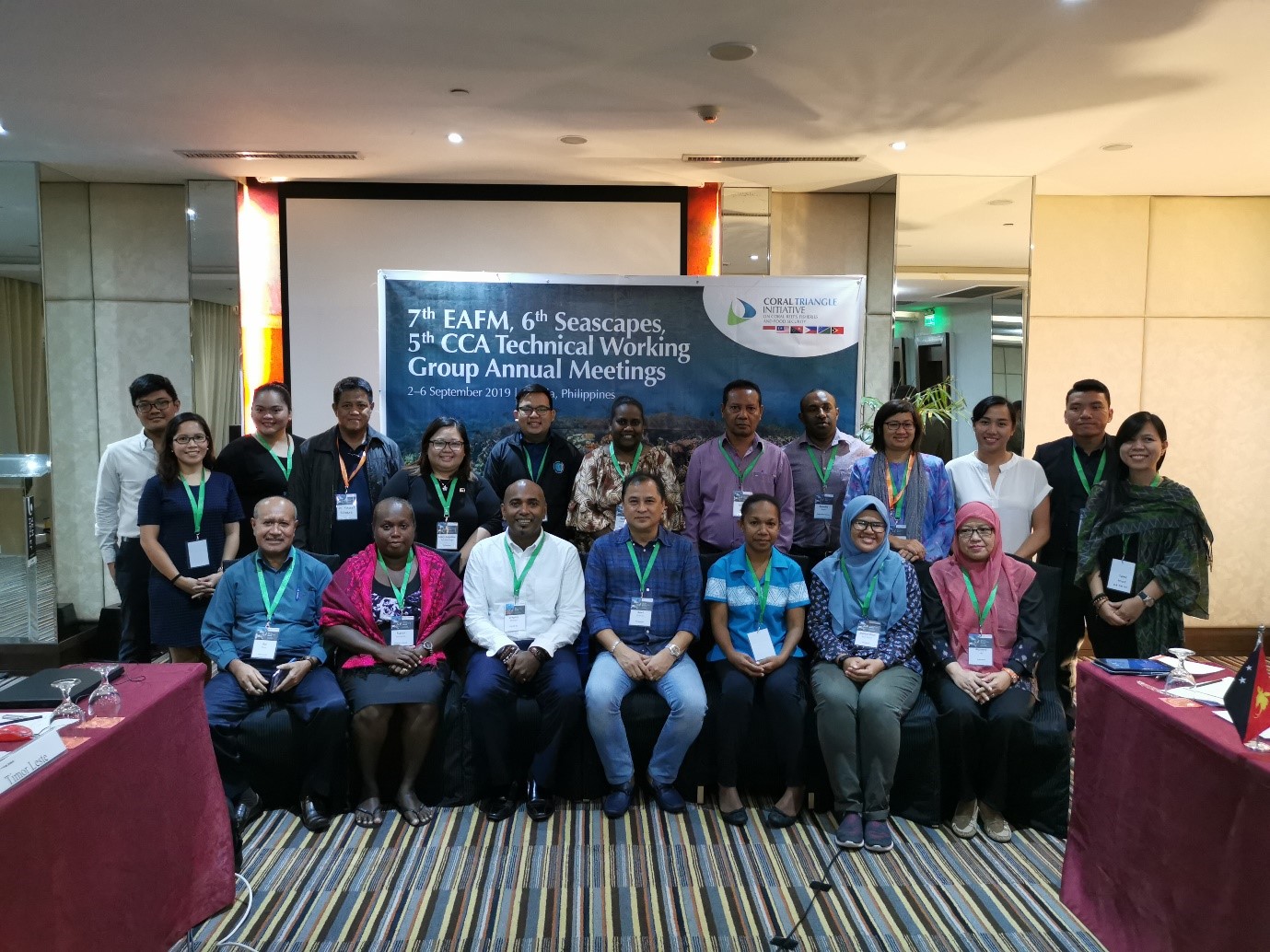
The 7th EAFM Working Group Meeting
3
24-26th June 2019
Dili, Timor-Leste
Catch Documentation and traceability (CDT) system design and Development Based on Ecosystem
Approach to Management of Fisheries (EAFM) Workshop. (Funding from the US Department of Interior
through the Strengthening Organizational and Administrative Capacity (SOACAP) activities)
4
6-11th August 2018
Bali, Indonesia
Regional Training Workshop on EAFM with Corredor Marino del Pacifico Este Tropical (CMAR), Bali,
Indonesia.
5
25-28th June 2018
Bitung, Indonesia
Learning Exchange for Coral Triangle Member countries to the USAID Oceans and Fisheries
Partnerships Learning Site (Bitung, Indonesia) on the application of Catch Documentation and
traceability (CDT) system for Fisheries and Seafood Products. (Funding from the US Department of
Interior through the Strengthening Organizational and Administrative Capacity (SOACAP)
activities)
6
April 2018
Jakarta, Indonesia
CTI-CFF Public Private Partnership (PPP) Preparation: Expert-Consultation Meeting on PPP Design
and Arrangement. (Funding from the US Department of Interior through the Strengthening
Organizational and Administrative Capacity (SOACAP) activities)
7
1-2 August 2017
Tagaytay City, Philippaines
COASTFISH Workshop
8
7 July 2017
Iloilo City, Philippines
Tuna Governance Workshop, Iloilo City, Philippines
9
6 July 2017
Iloilo City, Philippines
The Third Coral Triangle Fishers Forum Communiqué
10
4-6 July 2017
Iloilo City, Philippines
the 3rd Coral Triangle Fisheries Forum (COASTFISH)
11
November, 2015
Manado, Indonesia
6th EAFM Working Group Meeting
12
1 June 2015
Manado, Indonesia
5th EAFM Working Group Meeting
13
24-25 Nov 2013
Manila, Philippines
4th EAFM Working Group Meeting, Manila
14
14-16 May 2013
Bali, Indonesia
3rd EAFM Working Group Meeting
15
25 May 2012
Putrajaya, Malaysia
2nd EAFM Working Group Meeting
16
10-15 October 2011
Kota Kinabalu, Malaysia
Conducted CTI-CFF Regional Exchange on EAFM LRFFT in the CTI
17
20-23 September 2011
Kota Kinabalu, Malaysia
CTI-CFF Regional Exchange and Policy Workshop on Ecosystem Approach to Fisheries Management
18
1 September 2011
Kota Kinabalu, Malaysia
1st EAFM Working Group Meeting
Outreach Materials
#
Documents
Documents Link
1
Poster: Trochus Fisheries Management
2
Poster: Commercially important species of sea cucumber - minimum catch-size and notes on
management; Labele kaer Banabe ne’e ho medida ki’ik liu ne’e
3
Technical Brief: An Ecosystem Approach to Fisheries Management (EAFM) and the Coral Triangle
Initiative, September 2011
Guidelines
#
Documents
Documents Link
1
Guidelines: Toward Ecosystem-based Coastal Area and Fisheries Management in the Coral Triangle:
Integrated Strategies and Guidance
Guidelines: Incorporating Climate and Ocean Change into an Ecosystem Approach to Fisheries
Management (EAFM) Plan
4
Guidelines: Incorporating Climate and Ocean Change into an Ecosystem Approach to Fisheries
Management (EAFM) PlanFAO Technical Guidelines For Responsible Fisheries Supplement 4: Marine
Protected Areas and Fisheries, 2011
Activity reports
#
Documents
Documents Link
1
Activity Report: The 3rd Coral Triangle Fisheries Forum
2
The Third Coral Triangle Fishers Forum Communiqué
3
Activity Report: Sustainable Fisheries Workshop Report, Tun Mustapha Park, Kudat, Malaysia, Sept
23-24, 2010
4
Activity Report: Stakeholder Workshop on the Management of the Live Reef Fish Trade in Papua New
Guinea
5
ACTIVITY REPORT LEARNING EXCHANGE BITUNG
6
Annual 7th EAFM MEETING Activity Report
7
Report: 3rd CTI Regional Exchange on the Implementation of EAFM in the Coral Triangle Countries,
May 2012
8
Report: First Coral Triangle Fisher's Forum Outcomes and Opportunities
9
Report: CTI-CFF Regional Exchange on an Ecosystem Approach to Sustainable Live Reef Fish Food
Trade in the Coral Triangle, Kota Kinabalu, Malaysia, October 2010
10
Report: CTI-CFF Regional Exchange and Policy Workshop on Ecosystem Approach to Fisheries
Management, Kota Kinabalu, Malaysia, September 2011
11
Report: Regional Exchange on Enhancing Local Government and Stakeholder Capacity for Ecosystems
Based Fisheries Management, Cebu, Philippines, June-July 2009
12
Activity Report: Lokakarya Nasional Penentuan Indikator Pendekatan Ekosistem Dalam Pengelolaan
Perikanan di Wilayah Pengelolaan Perikanan Indonesia (National Workshop on Ecosystem Approach In
Determining Fisheries Management in Indonesia)
Brochures
#
Documents
Documents Link
1
Brochure: Towards an Ecosystem Approach to Fisheries Management - Indonesian progress in
implementing EAFM
2
Brochures: Tun Mustapha Park, Sabah Malaysia
3
Brochure: Ministerial Diploma and Co-Management - Together we can
4
Brochure: Benefits of no-take zones
5
Brochure: Transformations for Tomorrow - the CTSP Project in the Philippines
6
Brochure: Hindi lahat ng “dulong” ay dulong
Sulu Sulawesi EAFM
#
Documents
Documents Link
1
IMPLEMENTATION WORKSHOP FOR THE SULU-SULAWESI SEASCAPE ECOSYSTEM APPROACH TO FISHERIES
MANAGEMENT PLAN
2
Transboundary Diagnostic Analysis
3
Regional Strategic Action Program
4
Sulu-Sulawesi Seascape, Ecosystem Approach Fisheries Management (EAFM) Implementation Planning
Meeting June 2-5, 2015 Manado, Indonesia
Policy Brief
#
Documents
Documents Link
1
Policy Brief: Using Marine Protected Area Networks to Achieve Fisheries, Biodiversity and
Climate Change Objectives
2
Policy Report: Review of Malaysian Laws and Policies in Relation to the Implementation of
Ecosystem Approach to Fisheries Management (EAFM) in Malaysia - Final Report
3
Resolution on Sustainable Live Reef Food Fish Trade for the Southeast Asian and CTI-CFF
Countries
Training Materials
#
Documents
Documents Link
1
Coastfish Workshop 2017
2
Terms of Reference CTI-CFF/USAID SOACAP Activity 2.1 CTI-CFF Public Private Partnership (PPP)
Preparation (Technical Program)
3
Proceedings: Fourth CTI-CFF EAFM Technical Working Group Meeting, November 24-25, 2013
4
Proceedings: CTI-CFF 3rd EAFM Technical Working Group Meeting, Sanur, May 14-16, 2013
5
Training material: Designing Effective Locally Managed Areas in Tropical Marine Environments -
Flip Charts Part Two (Indonesian)
6
Study: Planning the Use of Fish for Food Security in Solomon Islands, September 2011
7
Study: Mapping Fisheries Dependence and Aquaculture Development in Timor-Leste: A Scoping Study,
September 2011
Fact Sheets
#
Documents
Documents Link
1
Factsheet: Gazettement and Development of Tun Mustapha Park Integrated Management Plan
2
Fact sheet: Developing Zoning Plan for Tun Mustapha Park
3
Fact sheet: Fisheries Management in Tun Mustapha Park
4
Fact sheet: Managing the Live Reef Fish Trade in Sabah, Malaysia
5
Fact sheet: Little Big Fish: A study of Dulong fisheries in the Philippines
6
The Coral Triangle Initiative Integrated Toolkit (Fact sheet)
7
Factsheet: Valuation Study of the proposed Tun Mustapha Park
8
Factsheet: Sustaining Fisheries in Tun Mustapha Park, Part 2
9
Factsheet: Sustaining Fisheries in Tun Mustapha Park, Part 1
Technical Reports
#
Documents
Documents Link
1
Final Report: Lessons from the US Coral Triangle Support Program
2
Technical Report: Sustainable Livelihoods and an Ecosystem Approach to Fisheries Management
3
Technical Report: An Introduction to Marine Spatial Planning
4
Technical Report: Indikator Keberhasilan Pendekatan Ekosistem Dalam Pengelolaan Perikanan dan
Penilaian Awal pada Wilayah Pengelolaan Perikanan Indonesia (EAFM and Preliminary Assessment on
Regional Fisheries Management Indonesia)
5
Technical Report: Keragaan Pendekatan Ekosistem Dalam Pengelolaan Perikanan: di Wilayah
Pengelolaan Perikanan Indonesia (Ecosystem Approach to Fisheries Management: Fisheries in
Indonesia) - Main Report
6
Technical Report: An Introduction to Marine Spatial Planning
7
Technical Report: Ecosystem Approach to Fisheries Management (EAFM): A Solomon Islands Policy
Review
8
Technical Report: Principles for Best Practice for Community-Based Resource Management (CBRM) in
Solomon Islands
9
Technical Report: Review of National Laws and Legislation in the Philippines in Relation to
Ecosystem Approach to Fisheries Management (EAFM)
10
Technical Report: Small Fish, Big Impact: Dulong Fisheries of San Juan, Batangas, Philippines -
A Synthesis Report
11
Technical Report: Fisheries Assessment for Feasibility of Spatial Management of Two Major
Commercial Fishing Gears within the proposed Tun Mustapha Park
12
Technical Report: Ecosystem Approach to Fisheries Management (EAFM) - Country Position Paper,
Malaysia
13
Technical Report: Implementation of the Ecosystem Approach to Fisheries Management (EAFM) in
Papua New Guinea
14
Technical Report: Implementation of Ecosystem Approaches to Fisheries Management (EAFM) in the
Coral Triangle
15
Technical Report: Determination of fishery and socio-economic effects of SIMCA on local fishing
communities and evaluation of the effects of reserve protection on reef fish size and abundance
16
Report: Intergovernmental Forum on Live Reef Food Fish Trade (LRFFT) held in Bangkok, Thailand
on January 31-February 1, 2013
Other Reference Materials
#
Documents
Documents Link
1
Final Report: Lessons from the US Coral Triangle Support Program
2
Working paper: Analyzing The (Mis)Fit Between Institutional And Ecological Networks Of The Coral
Triangle Report To The WWF-US Coral Triangle Support Partnership
3
Statistics: Coral Triangle Geographic and Fisheries Data Compilation, 2010
4
Statistics: Coral Triangle Facts, Figures and Calculations: Patterns of Biodiversity and
Endemism, December 2008
5
Map: Live Reef Fish Trade Routes in the Coral Triangle
The Coral Triangle Initiative on Coral Reefs, Fisheries, and Food Security (CTI-CFF) Capacity Building Roadmap aims to enhance competencies for safeguarding marine ecosystems in the Coral Triangle the world’s epicentre of marine biodiversity covering Indonesia, Malaysia, Papua New Guinea, Philippines, Solomon Islands, and Timor-Leste. Grounded in the CTI-CFF Regional Plan of Action (RPOA), this initiative aligns regional efforts with global conservation objectives, including the global goal to protect 30% of the ocean by 2030.
reads
The Women Leaders’ Forum (WLF) met last June 27, 2019 in Dili Timor-Leste with NCC representatives and partners to discuss ways to synergize existing and future work in the region. The meeting also gathered inputs from the participants to be included into the draft gender policies/regulations matrix especially on the gaps and challenges, how women participation is included in planning and implementation process, gender equality integration. Further, the information will feed into the RPOA 2.0 process.
The Women Leaders’ Forum (WLF) met last September 2019 in Bali Indonesia with NCC representatives and partners. The workshop was specifically designed to engage a cadre of coastal and marine management professionals who are eager and committed to furthering women’s leadership in coastal and marine resource management efforts.
The Coral Triangle Initiative on Coral Reefs, Fisheries and Food Security (CTI-CFF) Regional Secretariat (interim) was created during the First CTI-CFF Senior Officials Meeting in Bali in December 2007.
It is mandated to promote regional cooperation, sharing of lessons, and facilitate learning across the six Coral Triangle countries - Indonesia, Malaysia, Papua New Guinea, Philippines, Solomon Islands and Timor-Leste. The Regional Secretariat also coordinates and monitors the progress in achieving the CTI-CFF Regional Plan of Action goals. Its main activities cover the following areas: Technical Working Groups, Governance Working Groups, Cross Cutting Themes, Technical Program, Corporate Services (e.g. organizational development, capacity development). It also serves as the main liaison for all CTI-CFF official functions such as the annual CTI-CFF Senior Officials Meetings and the biennial CTI-CFF Ministerial Meetings.
The permanent Regional Secretariat was officially established with the appointment of the first Executive Director in April 2015, where the headquarter is based in Manado, Indonesia.
Our Mission Statement
The CTI-CFF Regional Secretariat’s mission is to initiate, to coordinate, and to facilitate communication and activities across CTI-CFF Member Parties (Indonesia, Malaysia, Papua New Guinea, Philippines, Solomon Islands, and Timor-Leste). These efforts will implement the goals and objectives of the Regional Plan of Action to address emerging and transboundary issues on sustainable management of marine resources and food security in the Coral Triangle Region.