-
News
- admin
- 11 Dec 2024
CTI-CFF Internal Resources Committee (IRC) Meeting
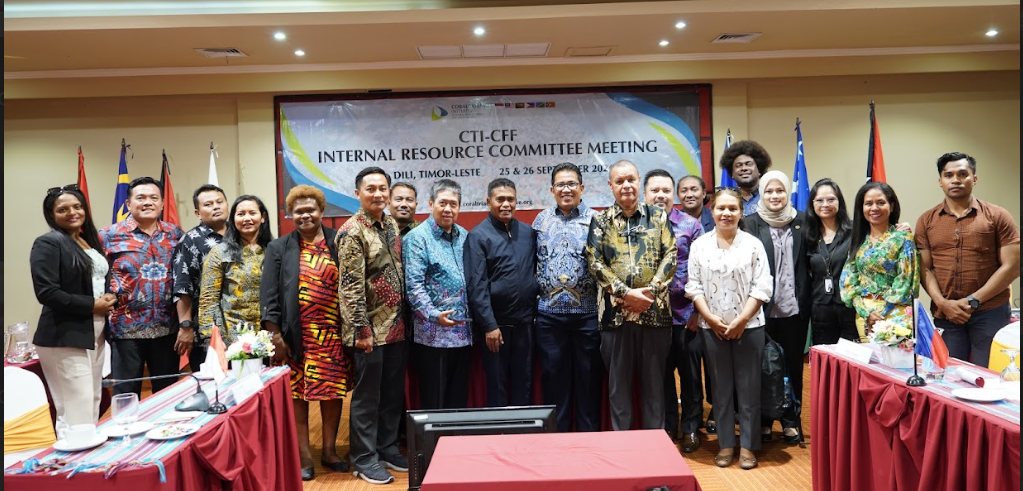
The Coral Triangle Initiative on Coral Reefs, Fisheries, and Food Security (CTI-CFF) convened its Internal Resources Committee (IRC) Meeting on 25–26 September 2024 at the Novo Turismo Hotel in Dili, Timor-Leste. This pivotal gathering brought together representatives from the six member countries of the Coral Triangle (CT6)—Indonesia, Malaysia, Papua New Guinea, the Philippines, Solomon Islands, and Timor-Leste—alongside the CTI-CFF Regional Secretariat team. Delegates participated both in person and virtually, demonstrating their shared commitment to advancing regional collaboration in marine conservation and sustainable development.
The event opened with remarks from Dr. Frank Keith Griffin, Executive Director of the CTI-CFF Regional Secretariat, who welcomed participants and emphasized the importance of transparent financial management in sustaining the organization’s mission. He also provided updates on initiatives related to SOM-18, setting the stage for focused deliberations. Leadership transitions marked the opening session as Timor-Leste’s IRC Chair, Mr. Horacio Amaral dos Santos Guterres, passed the baton to Co-Chair Dr. Hendra Yusran Siry of Indonesia, who skillfully guided the discussions over the two days.
The meeting’s objectives focused on key issues critical to CTI-CFF’s future. Delegates reviewed progress on decisions made during the 18th Senior Officials Meeting (SOM-18), examined the status of 2024 country contributions and financial reports for 2023–2024, and assessed the proposed 2025 budget alongside projections for 2026–2027. Additionally, governance matters were discussed, including updates to staff and financial regulations and strategies for managing overdue contributions. These deliberations aimed to strengthen the organization’s governance and financial stability while ensuring continued alignment with the shared goals of the CT6 countries.
A key highlight of the meeting was the presentation on country contributions for 2024. Each member country reaffirmed its commitment to fulfilling its financial obligations, reflecting the collective resolve to address existing challenges. The Regional Secretariat outlined interim measures to manage delayed payments by utilizing restricted funds—a proposal endorsed by the committee, recognizing the importance of maintaining financial stability while fostering open communication with member countries to prevent future delays.
Governance improvements were also a focal point of the meeting. The Regional Secretariat introduced new staff members and proposed a restructuring plan to enhance operational efficiency. This plan includes establishing specialized management roles in areas such as Human Resources, Data Management, Ecosystem Approach to Fisheries Management (EAFM), and Climate Change Adaptation (CCA). Notably, these new positions will be funded through external sources to avoid additional financial burdens on the CT6 countries. The IRC also approved a revised salary structure for 2025, designed to attract and retain highly skilled professionals essential to advancing CTI-CFF’s mission.
Looking ahead, the committee discussed preparations for the 9th Ministerial Meeting, including draft elements for the Joint Ministerial Statement, and reviewed a concept note for Coral Triangle Day 2025. Malaysia was proposed as the host for this significant event, which aims to bolster regional visibility and public engagement in CTI-CFF’s conservation efforts. These plans underscored the organization’s enduring commitment to celebrating and protecting the Coral Triangle’s exceptional marine biodiversity.
The IRC Meeting concluded with heartfelt appreciation for the dedication of all participants, the warm hospitality of the host country Timor-Leste, and the steadfast support of the Regional Secretariat. This gathering reinforced the unity and shared responsibility of CTI-CFF member countries, paving the way for robust initiatives in 2025 and beyond. It reaffirmed the critical importance of collaboration in safeguarding the Coral Triangle’s invaluable marine resources and ensuring their sustainability for generations to come.