-
News
- admin
- 14 Jun 2023
Workshop on Protecting Marine Migratory Species and Achieving the 30×30 Target through Transnational Approaches
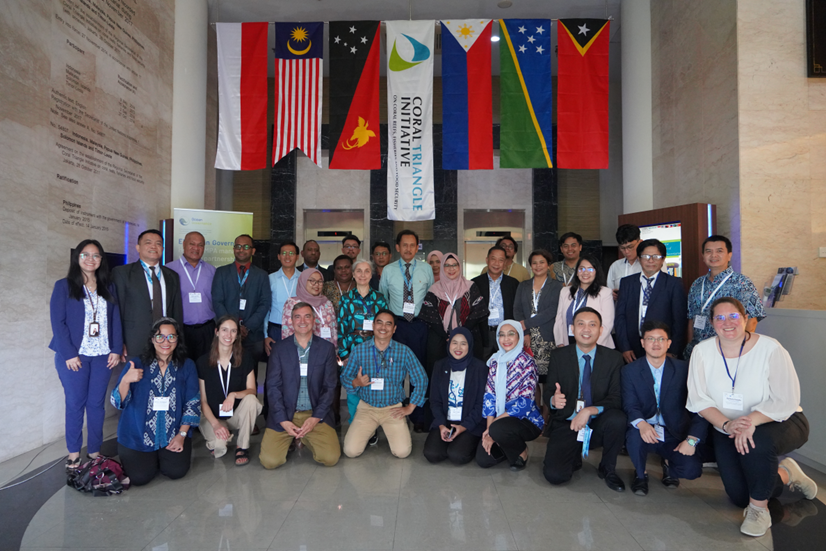
The Workshop on Protecting Marine Migratory Species and Achieving the 30×30 Target through Transnational Approaches was held in Manado, Indonesia, from May 15 to 17, 2023. The event was made possible through the collaboration of the WWF Coral Triangle Program, the EU Ocean Governance Project, and the CTI-CFF Regional Secretariat. The workshop also included the Threatened Species Working Group meeting for the second quarter of the year, attended by representatives from four CT countries who shared significant achievements and data.
The workshop brought together member countries and partners, providing an excellent opportunity to exchange knowledge and strategize ways to protect marine migratory species within the Coral Triangle region. It also contributed to advancing the Global Biodiversity Framework’s 30×30 target. The 30×30 target aims to conserve 30% of the world’s land and ocean surface by 2030, encouraging governments worldwide to designate these areas as protected areas or other effective area-based conservation measures (OECMs).
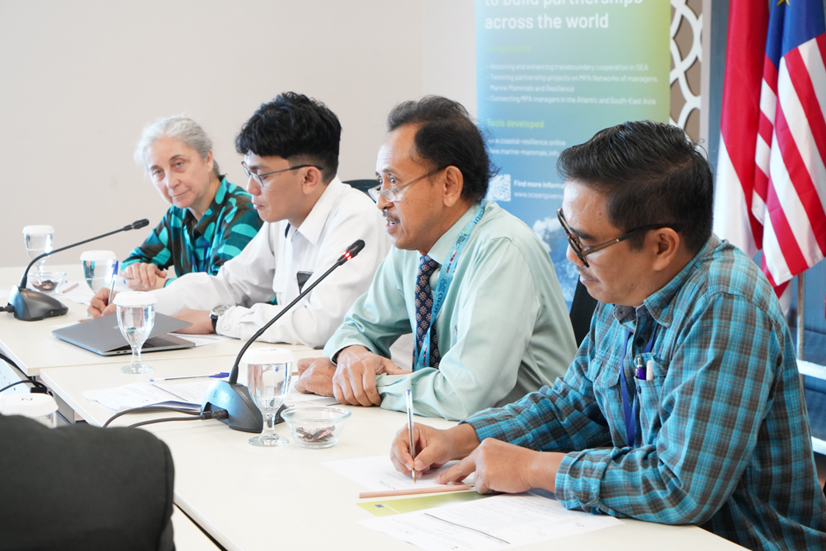
Dr. Mohd. Kushairi bin Mohd. Rajuddin, Executive Director of the CTI-CFF Regional Secretariat, in his welcoming remarks, wished for a fruitful discussion on how the participating parties can work together to protect marine species and achieve the 30×30 target. He emphasized that transnational approaches are crucial, as the threats facing marine migratory species are often complex and require coordinated efforts across different countries, particularly in the Coral Triangle region.
Veda Santiaji from WWF CTP and Puri Canals from the EU Ocean Governance for MPAs program provided an overview of the program goals and workshop objectives. The program aims to foster regional and international cooperation for the protection and restoration of marine and coastal ecosystems, contributing to the achievement of Aichi Target 11 and the Sustainable Development Goals (SDGs). This will be achieved through increasing knowledge, improving practices, strengthening knowledge exchange, and creating dialogue among MPA managers.
The workshop began with a series of presentations highlighting key elements and progress of the Ocean Governance project and its collaboration with the Coral Triangle Initiative on Coral Reefs, Fisheries, and Food Security (CTI-CFF). These presentations also covered global, regional, and national policies relevant to marine protection targets. Puri Canals presented the key elements and progress of the Ocean Governance project, while Charles Besancon discussed the road to Kunming-Montreal and Target 3 of the 30×30 initiative.
The morning session also featured presentations on the CTI-CFF Regional Plan of Action by Mr. Christovel Rotinsulu, Deputy Executive Director for Program Services. Claudia Binondo from the ASEAN Centre for Biodiversity highlighted the Centre’s support to ASEAN on Target 3 of the Convention on Biological Diversity’s Global Biodiversity Framework (CBD GBF). The session concluded with a discussion on transboundary cooperation under the Marine Protected Areas (MPA) Working Group.
After lunch, the focus shifted to the Convention on Migratory Species (CMS) and the ASEAN Centre for Biodiversity's support. Claudia Binondo emphasized the importance of international collaboration in protecting migratory species. The remainder of the afternoon was dedicated to presentations from each country, highlighting their progress in achieving Aichi Biodiversity Target 11 and their ambitions and challenges in meeting the new Target 3 of the CBD GBF.
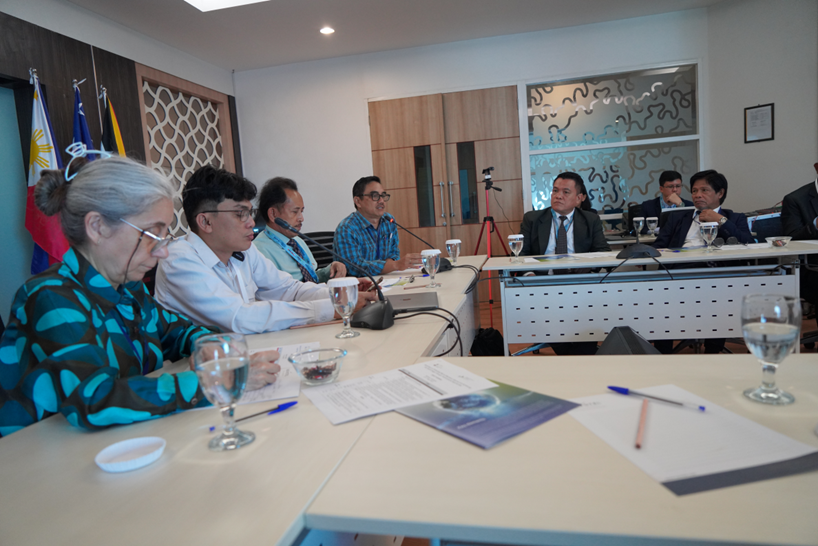
Day 2 began with an introduction to the day's agenda, followed by discussions on ecological considerations for migratory corridors and transboundary Marine Protected Areas (MPAs). Konservasi Indonesia presented Conservation International's support for migratory corridors and transnational MPAs, while Indonesia's National Research and Innovation Agency (BRIN) shared insights from their research on the topic.
During the morning session, participants engaged in an open discussion to exchange ideas and perspectives. The workshop then explored international cooperation for successful transboundary marine corridors and MPAs. Presentations included the ATSEA-2 Project by Deti Triani and Konservasi Indonesia by Budiati Prasetiamartati. Lessons learned from the Turtle Islands Heritage Park were also highlighted.
After lunch, the focus shifted to Indigenous Peoples' and Community Conserved Areas and Territories (ICCAs) and their relevance to migratory corridors and transboundary approaches. Cindy Julianti from the ICCA Consortium provided examples and insights into the critical role of ICCAs in marine conservation. Another open discussion allowed participants to share their perspectives.
Later in the afternoon, participants divided into two groups to discuss capacity gaps for transboundary and migratory species conservation, identifying opportunities, key flagship species, and main challenges. Two specific seascapes—the Sulu-Sulawesi Seascape (Indonesia, Malaysia, and the Philippines) and the Bismarck Solomon Seascape (Indonesia, Papua New Guinea, and Solomon Islands)—were examined in detail.
The day concluded with a presentation by Puri Canals on the role of MPA manager networks in supporting migratory species and corridors. This was followed by group discussions to develop key messages from the workshop and identify next steps for collaborative efforts to protect marine migratory species and achieve the 30×30 target.
On the following day, all participants joined a field trip to Lembeh Strait, Bitung Municipality, North Sulawesi. The area hosts a marine protected area established by the municipal government in response to community demand. The strait is well known for its tuna fishery and serves as a migration pathway for various species of sharks and rays. During the visit, participants learned about the MPA gazettement process from the Provincial Marine and Fisheries Agency.