-
News
- admin
- 16 Dec 2024
Strengthening Ties for a Sustainable Coral Triangle Through a Courtesy Visit to Honiara
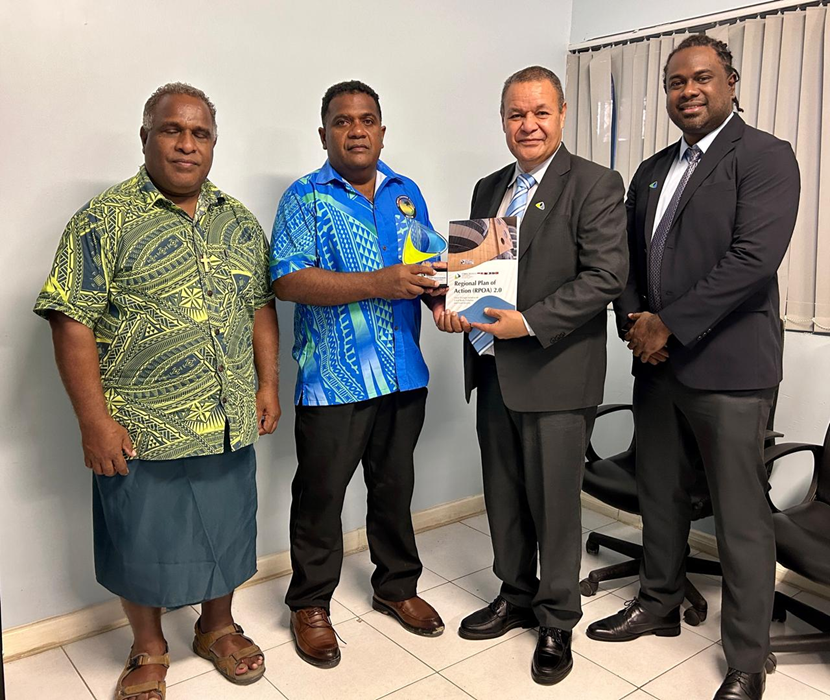
From July 22 to 25, 2024, CTI-CFF’s new Executive Director, Dr. Frank Griffin, accompanied by Technical Program Manager, Ms. Corzzierrah Posala, embarked on an inaugural courtesy visit to the Solomon Islands. This visit marked Dr. Griffin’s first official engagement in Honiara since assuming office, demonstrating his commitment to building strong alliances across the Coral Triangle region. His mission emphasized strengthening partnerships with local ministries, fostering collaborations with conservation organizations, and promoting community-centered marine conservation.
Their first meeting was with the Minister of Environment, Climate Change, Disaster Management, and Meteorology (MECDM), Hon. Trevor Mahaga, who extended a warm welcome to the CTI-CFF delegation. Dr. Griffin expressed his gratitude and presented CTI-CFF’s strategic vision under the Regional Plan of Action (RPOA) 2.0. The dialogue underscored the importance of a strong and technically proficient Secretariat to support member states, with Hon. Mahaga reaffirming the Solomon Islands’ commitment to marine conservation. The Minister and his team also emphasized the need for stable funding to enhance national capacity—an issue Dr. Griffin acknowledged and pledged to address through organizational restructuring aimed at improving operational efficiency.
Following this, Dr. Griffin met with a board member of the Coral Triangle Conservation Fund (CTCF), Dr. Michael Hapio’o, Climate Change Advisor to the Solomon Islands Government, who was accompanied by Mr. Barnabas Bago. Together, they discussed the significance of CTCF funding for strategic initiatives such as Spatial Mapping, Community-Based Resource Management (CBRM), and Sustainable Blue Financing. The meeting fostered a collaborative tone, with participants highlighting opportunities for regional funding to bolster CTI-CFF’s initiatives. Dr. Hapio’o noted promising prospects in leveraging international funding sources such as the Green Climate Fund (GCF) and the Global Environment Facility (GEF), which could further amplify the impact of CTI’s regional programs.
In a subsequent meeting with the Minister of Fisheries and Marine Resources, Hon. Nester Giro, Dr. Griffin highlighted the Solomon Islands’ pivotal role as a founding member of the CTI. Hon. Giro expressed optimism for CTI-CFF’s support in advancing national fisheries projects and underscored the importance of sustainable resource management tailored to local contexts. The Ministry’s Permanent Secretary, Dr. Christian Ramofafia, echoed these sentiments, calling for greater alignment of CTI projects with national policies to enhance community participation. Dr. Griffin provided an update on the Regional Secretariat’s restructuring, explaining that its core objective is to better serve member countries by addressing local challenges more effectively.
During a meeting with the Solomon Islands National University (SINU), Dr. Griffin engaged in meaningful discussions with Chancellor Dr. Morgan Wairiu and Vice Chancellor Dr. Transform Aqorau. The dialogue explored how SINU could contribute to CTI-CFF’s objectives through the University Partnership Network. Dr. Aqorau welcomed the collaboration, envisioning future joint efforts in research and capacity building. Dr. Griffin highlighted SINU’s potential to advance conservation education and strengthen the scientific foundation for sustainable resource management.
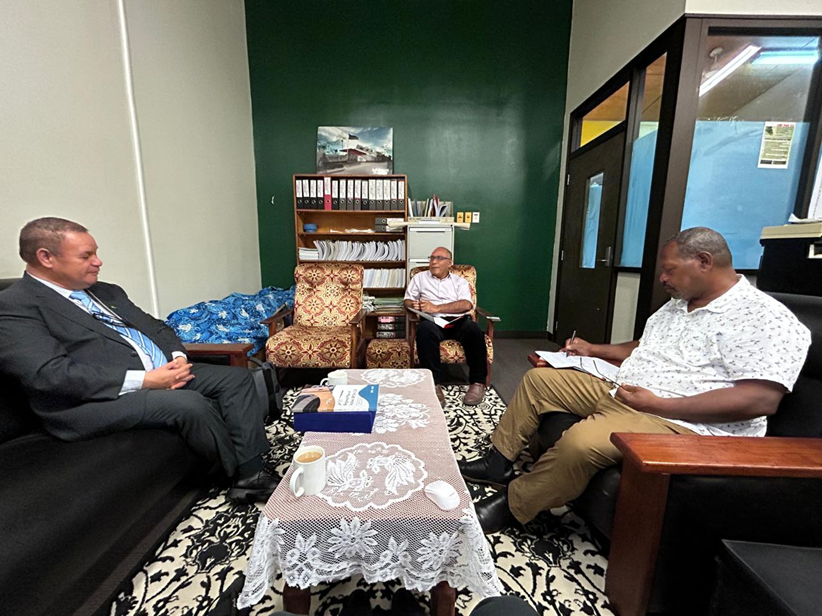
Engagements with international conservation organizations formed another vital component of the visit. At the World Wide Fund for Nature (WWF) office, Dr. Griffin and Ms. Posala met with WWF Solomon Islands Country Manager, Mr. Shannon Seeto. Their discussion highlighted WWF’s focus on community-based resource management, particularly in areas such as Isabel Province. Dr. Griffin commended WWF’s efforts in engaging local communities and suggested that CBRM could play a more integral role within CTI-CFF’s ecosystem-based fisheries management framework.
The following day, discussions with WorldFish Solomon Islands focused on climate resilience and sustainable coastal fisheries. Led by Ms. Janet Saeni-Oeta, WorldFish highlighted projects aimed at enhancing food security and diversifying livelihoods for coastal communities. The organization’s strong emphasis on gender inclusion resonated with CTI-CFF’s mission, and both parties agreed on the importance of joint initiatives to strengthen community capacities. Dr. Griffin acknowledged WorldFish’s contributions and proposed exploring further opportunities for collaboration, including seconding technical experts to support CTI-CFF programs.
The meeting with The Nature Conservancy (TNC), represented by Program Manager, Mr. Philip Diau, highlighted TNC’s work in the Arnavon Marine Park. Mr. Diau elaborated on TNC’s integrated conservation projects, which combine marine and terrestrial management to address the Solomon Islands’ unique environmental challenges. Dr. Griffin praised TNC’s focus on community engagement in conservation and proposed continuing the partnership to promote sustainable development and biodiversity preservation across the Coral Triangle region.
In his final engagement, Dr. Griffin met with the Director General of the Forum Fisheries Agency (FFA), Mr. Noan Pakop. This meeting laid the groundwork for future collaborations on fisheries governance, particularly in areas beyond national jurisdiction. Dr. Griffin emphasized CTI-CFF’s commitment to responsible fishing practices and marine conservation within these high-seas regions. The shared dedication to regional resource management established a strong foundation for joint actions addressing both ecological and national priorities.
The Regional Secretariat’s visit not only strengthened relationships with key stakeholders but also laid a solid foundation for future collaboration on critical initiatives, including sustainable fisheries, marine conservation, and community-based resource management in the Solomon Islands. Following the visit, the CTI-CFF Regional Secretariat will work closely with the Solomon Islands Government to advance the commitments made during these discussions—enhancing capacity-building programs, exploring new funding opportunities, and aligning national and regional conservation efforts. These follow-up actions aim to ensure that the outcomes of the visit translate into tangible benefits for both the Solomon Islands and the broader Coral Triangle region.