-
News
- admin
- 08 Jun 2012
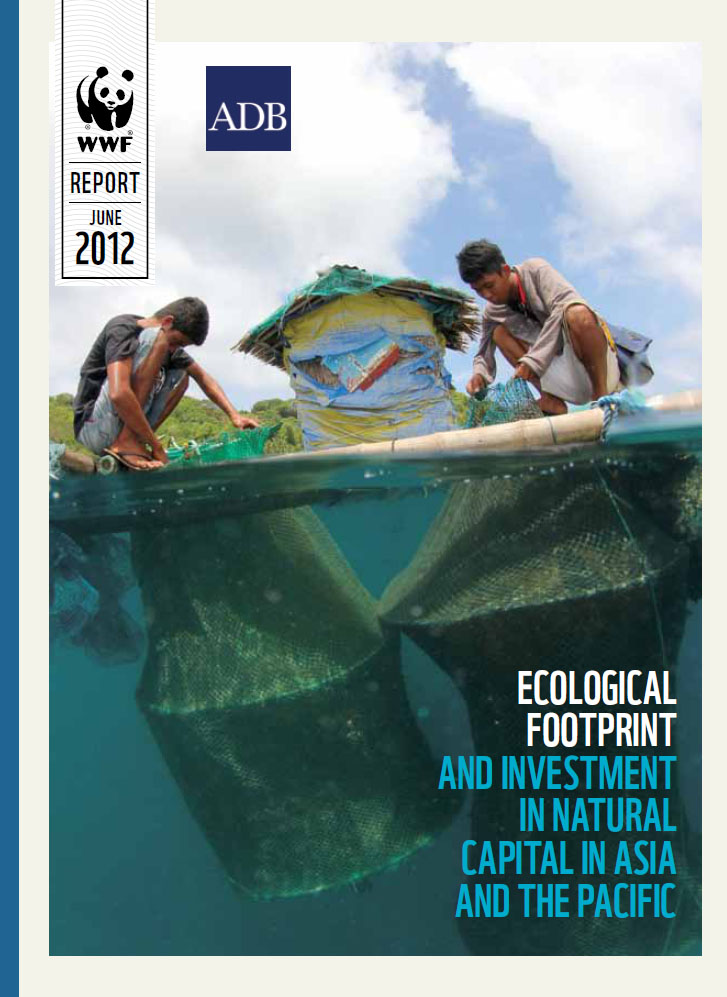
Despite the rich natural capital present in the Asia-Pacific region, the gap between the demand for natural resources and the environment’s ability to replenish those resources is widening, according to recent findings from the Ecological Footprint and Investment in Natural Capital in Asia and the Pacific report.
Released on June 5, 2012, and prepared by WWF and the Asian Development Bank (ADB), the report revealed that biodiversity is in decline across all types of ecosystems—including forests, rivers, and oceans—with the rate of species loss about twice the global average. The report focuses on four major regions where cooperative action to safeguard ecosystem services and natural resources is making a difference: the Heart of Borneo, the Coral Triangle, the Greater Mekong Subregion, and the Eastern Himalayas.
The report noted that in these subregions, the web of ecosystems provides income and livelihoods for millions of people and contributes billions of dollars annually in exports and national income. Coastal and marine habitats also provide multiple services that are not currently valued in the marketplace or fully recognized in decision-making processes. As a result, changing consumption patterns and ever-growing demand for resources are putting these ecosystems under extreme pressure.
Increasingly, however, governments, businesses, and communities are working together in these areas to protect biodiversity and ecosystems—allowing countries to maintain and increase the economic and social benefits derived from their natural capital. Various approaches are emerging and showing great promise in helping to maintain natural capital while encouraging green growth and poverty alleviation.
To download the report, click here.