-
News
- admin
- 29 Aug 2024
Insights from the 2nd UN Ocean Decade Regional Conference & 11th WESTPAC International Marine Science Conference
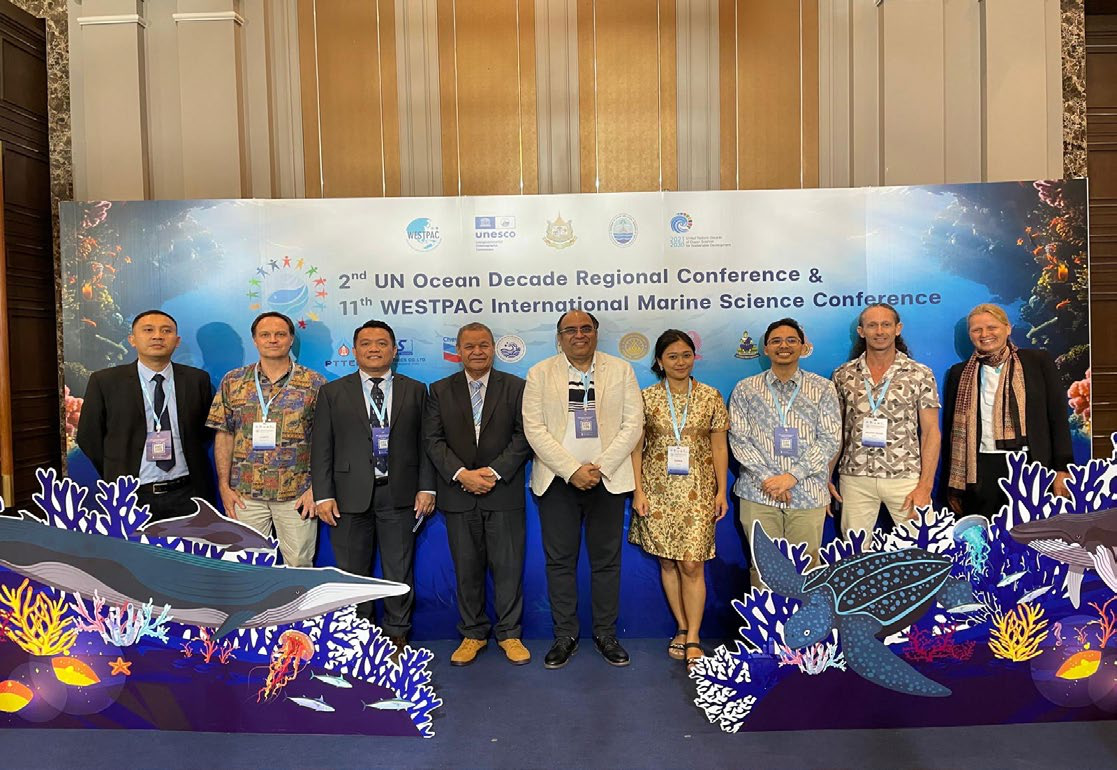
In the bustling city of Bangkok, Thailand, marine scientists, policymakers, and conservationists from around the world gathered for the 2nd UN Ocean Decade Regional Conference & 11th WESTPAC International Marine Science Conference, held from 22–25 April 2024. The theme, “Accelerating Ocean Science Solutions for Sustainable Development,” set the stage for discussions on pressing issues facing our oceans and strategies to address them effectively.
One of the key highlights of the conference was the focus on Marine Protected Areas (MPAs) and their role in conserving biodiversity and managing natural resources, particularly in the Coral Triangle region. This region, often referred to as the “Amazon of the Sea,” boasts unparalleled marine biodiversity but faces significant conservation challenges due to various anthropogenic pressures.
The Coral Triangle Initiative on Coral Reefs, Fisheries, and Food Security (CTI-CFF) seized the opportunity to emphasize the importance of continuous learning from international standards and knowledge resources. A side event titled “Advancing Marine Conservation in the Coral Triangle Region” was held during the conference in collaboration with IUCN, focusing on the Green List Standard — recognized as a global benchmark for assessing the governance and management of protected and conserved areas.
In the event, stakeholders from the Coral Triangle region and beyond convened to explore the application of the IUCN Green List Standard in MPA management. Dindo Campilan, IUCN Asia Regional Director, highlighted the significance of the Green List as a diagnostic tool for benchmarking MPA performance. This session served as an incubator for validating the Green List’s utility and discussing strategies for its mainstreaming and regional coordination.
In his remarks, the Executive Director of the CTI-CFF Regional Secretariat, Dr. Frank Keith Griffin, expressed that CTI-CFF is hopeful the gathering will help strengthen its understanding and application of the IUCN Green List. This effort builds upon the outcomes of the regional workshop conducted by IUCN in Bali, Indonesia, in 2022, which explored MPA capacity development for the Coral Triangle region based on this standard.
Christovel R.S. Rotinsulu, CTI-CFF Deputy Executive Director for Program Services, outlined RPOA 2.0’s role in improving MPA effectiveness, capacity building, and measurable outcomes. Representatives from Indonesia, Malaysia, and Timor-Leste shared nation-specific MPA priorities, successes, challenges, and opportunities.
In one of the discussions led by CTI-CFF NCC, Partners, and Private Officer (NPPO) Mr. Michael Tampongangoy, participants delved into key topics crucial for MPA effectiveness. Jan H. Steffan provided an insightful overview of the Solutions for Marine and Coastal Resilience in the Coral Triangle (SOMACORE) Project, while Maeve Nightingale emphasized advancing biodiversity protection in marine ecosystems. Siska Sihombing discussed the IUCN Green List and innovative financing for MPAs, followed by presentations from CTI-CFF Strategic NGO Partners.