-
News
- admin
- 11 Dec 2024
Insights from the 2nd UN Ocean Decade Regional Conference & 11th WESTPAC International Marine Science Conference
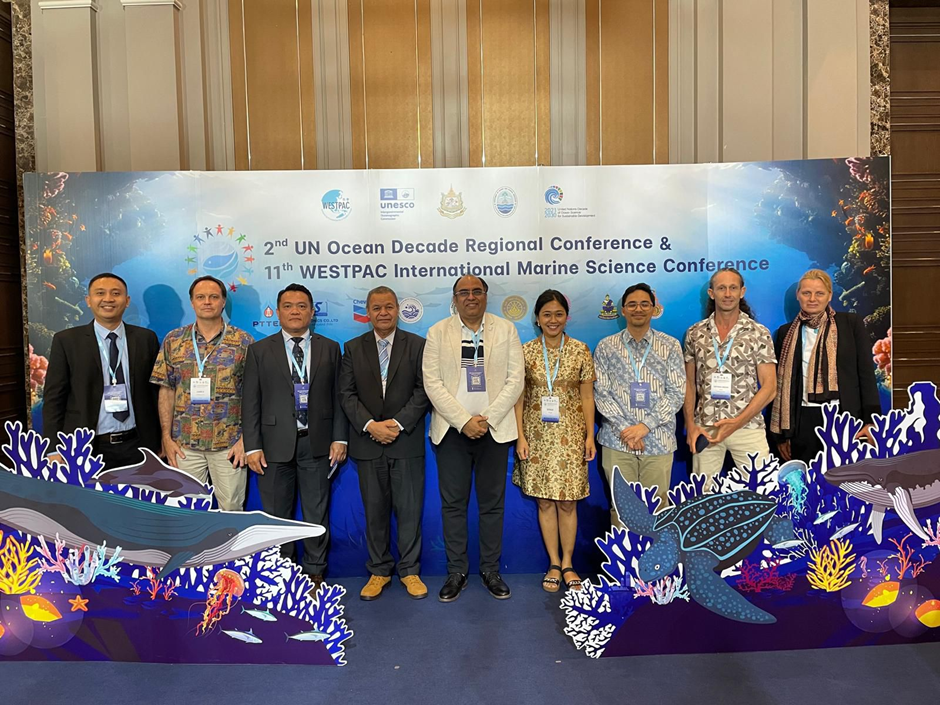
In the bustling city of Bangkok, Thailand, marine scientists, policymakers, and conservationists from around the world gathered for the 2nd UN Ocean Decade Regional Conference & 11th WESTPAC International Marine Science Conference, held from 22–25 April 2024. The theme, “Accelerating Ocean Science Solutions for Sustainable Development,” set the stage for discussions on pressing issues facing our oceans and strategies to address them effectively.
One of the key highlights of the conference was the focus on Marine Protected Areas (MPAs) and their role in conserving biodiversity and managing natural resources, particularly in the Coral Triangle region. This region, often referred to as the “Amazon of the Sea,” boasts unparalleled marine biodiversity but faces significant conservation challenges due to various anthropogenic pressures.
The Coral Triangle Initiative on Coral Reefs, Fisheries, and Food Security (CTI-CFF) seized the opportunity to emphasize the importance of continuous learning from international standards and knowledge resources. A side event titled “Advancing Marine Conservation in the Coral Triangle Region” was held during the conference in collaboration with IUCN, focusing on the Green List Standard — recognized as a global benchmark for assessing the governance and management of protected and conserved areas.
During the event, stakeholders from the Coral Triangle region and beyond convened to explore the application of the IUCN Green List Standard in MPA management. Mr. Dindo Campilan, IUCN Asia Regional Director, highlighted the significance of the Green List as a diagnostic tool for benchmarking MPA performance. This session served as an incubator for validating the Green List’s utility and discussing strategies for its mainstreaming and regional coordination.
In his remarks, CTI-CFF Regional Secretariat Executive Director Dr. Frank Keith Griffin expressed hope that the gathering would help strengthen understanding and application of the IUCN Green List. He noted that this effort builds upon the outcomes of the regional workshop IUCN conducted in Bali, Indonesia, in 2022, which explored MPA capacity development for the Coral Triangle region based on this standard.
Mr. Christovel R.S. Rotinsulu, CTI-CFF Deputy Executive Director for Program Services, outlined RPOA 2.0’s role in improving MPA effectiveness, capacity building, and measurable outcomes. Representatives from Indonesia, Malaysia, and Timor-Leste shared nation-specific MPA priorities, successes, challenges, and opportunities.
In one of the discussions led by CTI-CFF NCC Partners and Private Officer (NPPO) Mr. Michael Tampongangoy, participants delved into vital topics crucial for MPA effectiveness. Mr. Jan H. Steffan provided an insightful overview of the Solutions for Marine and Coastal Resilience in Coral Triangle (SOMACORE) Project, while Ms. Maeve Nightingale emphasized advancing biodiversity protection in marine ecosystems. Ms. Siska Sihombing discussed the IUCN Green List and innovative financing for MPAs, followed by presentations from CTI-CFF Strategic NGO Partners.
CTI-CFF and IUCN Collaborative Meeting
A day after the UN Ocean Decade Conference, representatives from the Coral Triangle Initiative on Coral Reefs, Fisheries, and Food Security (CTI-CFF) convened a meeting with the International Union for Conservation of Nature (IUCN) Asia Regional Office team.
Representing CTI-CFF were Executive Director Dr. Frank Keith Griffin, Deputy Executive Director for Program Services Mr. Christovel R.S. Rotinsulu, and NCC Partners and Private Officer Mr. Michael Tampongangoy. From IUCN were Mr. James Hardcastle, Head of Protected and Conserved Areas; Ms. Maeve Nightingale, Head of the Marine and Coastal Programme, Asia Regional Office (ARO); Mr. Mohammad Khalid Sayeed Pasha, Asia Regional Coordinator for Protected and Conserved Areas and IUCN Green List; Ms. Siska Sihombing, Programme Officer, IUCN Protected and Conserved Areas; and Mr. Satrio Adi Wicaksono, Programme Officer, Science and Strategy Group, ARO.
Amidst a shared commitment to marine conservation, discussions delved into collaboration and coordination between the two organizations. At the forefront were deliberations on the SOMACORE Project, staff placements, and the broader implications of their Memorandum of Understanding (MoU).
Both CTI-CFF and IUCN recognized the importance of aligning their initiatives with the Regional Plan of Action (RPOA) 2.0, emphasizing the need for synergy across various project activities and Technical Working Groups (TWGs).
The meeting served as a platform for mutual appreciation, as CTI-CFF extended gratitude to IUCN for orchestrating the impactful “Advancing Marine Conservation in the Coral Triangle Region” side event. This event not only showcased active participation from members of the Marine Protected Areas (MPA) TWG but also underscored the potential and challenges faced by CT6 countries in managing their marine resources.
Central to the discussions was a shared acknowledgment of the critical importance of effective MPA management. Both parties identified this as a cornerstone for achieving sustainable conservation outcomes in the region.
Exploration of innovative financing mechanisms emerged as a focal point, with discussions revolving around the potential of Coral Bonds and Blue Bonds in ensuring the long-term sustainability of MPAs. Additionally, deliberations included the development of metrics to measure the success of such strategies.
The meeting marked a significant milestone with the formalization of the MoU between IUCN and the CTI-CFF Regional Secretariat, cementing their commitment to collaborative conservation endeavours.
Moving forward, both CTI-CFF and IUCN underscored the importance of continued collaboration, particularly in the lead-up to the launch of the SOMACORE Project in June 2024. This shared resolve reflects their common vision for a resilient and vibrant Coral Triangle region, where marine conservation remains central to sustainable development efforts.