-
News
- admin
- 16 Dec 2024
Gender Equality and Social Inclusion (GESI) Regional Exchange: Advancing Inclusive Fisheries Management in the Coral Triangle
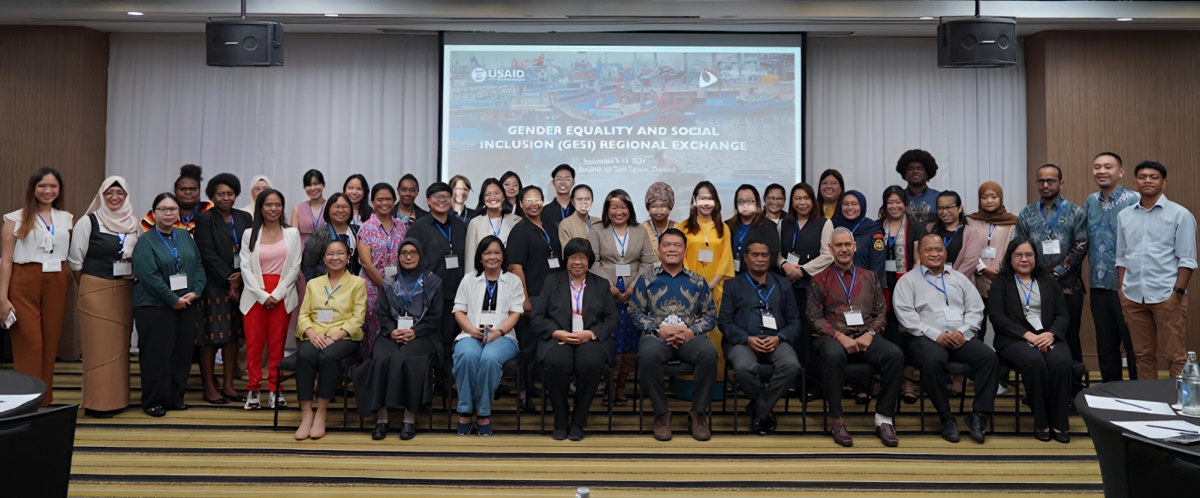
On September 9-10, 2024, the Gender Equality and Social Inclusion (GESI) Regional Exchange (REX) took place at Novotel Bangkok, bringing together participants from across the Coral Triangle and Southeast Asia. The event aimed to advance gender equity and social inclusion in fisheries management and coastal conservation, a priority for the Coral Triangle Initiative on Coral Reefs, Fisheries, and Food Security (CTI-CFF).
The event, initiated by USAID Sustainable Fish Asia Technical Support (SuFiA TS) in collaboration with CTI-CFF, began with welcoming remarks from Dr. Arlene Satapornvanit, Chief of Party (COP) of USAID SuFiA TS. She highlighted the importance of addressing challenges faced by women and marginalized communities in fisheries.
CTI-CFF Deputy Executive Director for Program Services, Christovel Rotinsulu, emphasized the significance of GESI in the Regional Plan of Action (RPOA) 2.0 and reaffirmed CTI-CFF's commitment to gender mainstreaming. Attendees included CT6 country officials involved in the Women Leaders’ Forum Working Group and representatives from various USAID-supported projects.
One key objective of the exchange was to gather input for establishing a regional GESI Hub. Envisioned as a platform to advocate for gender equality and social inclusion, the Hub will work with regional organizations and private sector partners to enhance capacity-building initiatives, support the integration of GESI into fisheries management policies, research, and grant proposals, ensuring underrepresented groups have a voice in decision-making.
CTI-CFF believes that mainstreaming GESI makes fisheries and coastal management more inclusive, fostering equitable access to resources and benefits. The Women Leaders’ Forum (WLF) assists women’s groups in CT6 countries in fisheries production and local conservation area management.
Endorsing GESI recognizes the knowledge and roles of women, indigenous peoples, youth, and other marginalized groups, whose contributions are critical to sustainable and resilient coastal ecosystems. GESI mainstreaming also addresses social and economic barriers, promoting fair opportunities and community resilience against environmental and climate-related challenges.
Key Discussions: Gender, Fisheries, and Climate Change
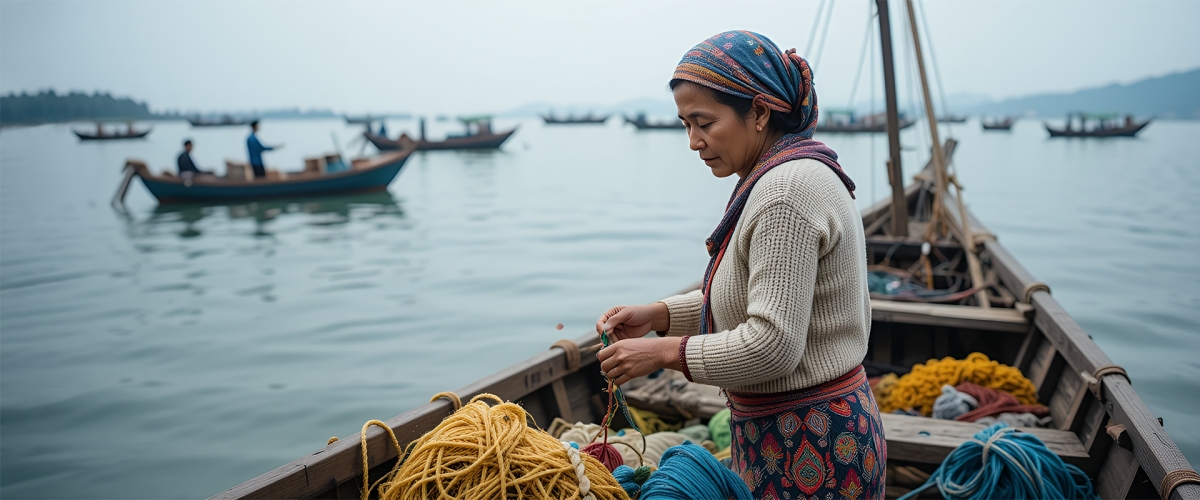
The first day featured a session led by Jasmin Saad on the intersection of climate change, fisheries, and GESI. It highlighted the vital role women play in fisheries, particularly post-harvest, and the disproportionate impact of climate change on marginalized communities. Women remain underrepresented in decision-making roles, holding less than 15% of such positions in the Indo-Pacific region.
The exchange addressed gender-based violence (GBV) in fisheries, including "sex-for-fish" and other exploitative practices. Climate change exacerbates social and economic inequalities, emphasizing the need for gender-sensitive policies to protect vulnerable communities.
Sharing Success Stories and Identifying Challenges
Representatives from Indonesia, Malaysia, Papua New Guinea, Timor-Leste, Thailand, Lao PDR, and Vietnam shared experiences in integrating GESI into fisheries management. Successes included Indonesia’s “Patin Pustina” fishery village and Malaysia’s gender mainstreaming initiatives in aquaculture. Challenges remain, such as limited female representation in leadership, cultural barriers, and gaps in access to education and economic opportunities.
Many Coral Triangle and Southeast Asian countries still face gender imbalances due to entrenched cultural norms. Women are often in lower-paying, post-harvest roles and underrepresented in leadership and policy-making, leaving their contributions undervalued. Targeted efforts are needed to promote gender equity and equal opportunities in sustainable development initiatives.
To build participants’ capacity to integrate GESI principles, workshops included proposal writing led by Professor Kyoko Kusakabe from the Asian Institute of Technology, emphasizing gender analysis, stakeholder inclusion, and gender-responsive indicators.
Looking Ahead: The GESI Hub’s Role
The second day focused on collaborative discussions to establish the GESI Hub. Using interactive platforms like Slido, participants shared insights on achieving sustainability, communication channels, and driving long-term impact.
The event concluded with two panel discussions featuring women leaders from the region, sharing experiences in navigating challenges and promoting GESI in fisheries. Panelists included Laura Whitford (The Nature Conservancy), Joannie Jomitol (WWF-Malaysia), Dinna Umengan (Tambuyog Development Center/SEAFISH), Agnes Saul (CTI-CFF Youth Ambassador), Elsie Mae A. Solidum (Department of Science and Technology, Philippines), Glycel Formentira Miñoza (IMPL Project), and Haidisheena Allama (MAFAR, Bangsamoro). Panels were moderated by Nguyen Thu Hue and Jasmin Mohd. Saad.
The GESI Hub is expected to promote equitable and inclusive policies, enhance livelihoods of women and marginalized groups, and ensure long-term sustainability of fisheries in the Coral Triangle and beyond.