-
News
- admin
- 12 Dec 2017
Cape Town, South Africa, 27 November – 1 December 2017
#The 1st Meeting: “Building International Partnership Meeting to Enhance Science-Based Ecosystem Approaches in Support of Regional Ocean Governance in the Context of 2030 Agenda for Sustainable Development” – 27-28 November 2017
#The 2nd Meeting: “The 19th Annual Large Marine Ecosystem and Coastal Partners Meeting” – 29 November-1 December 2017
The two respective meetings have brought unity in participants’ perspectives i.e. the emerging challenges in safeguarding the world’s marine and coastal resources need extra efforts and collaborative works across regions. The partnership is key. However, to realize an integrated one, a multi-discipline actionable commitment is needed.
During the five-day meeting, participants and facilitators tried to find common challenges, opportunities, and the best solutions to address current problems. Not just about science-based approaches, but also practical implementation achievable by international organizations, governments, and communities.
As Vladimir Ryabinin, Executive Secretary, IOC (Intergovernmental Oceanographic Commission) UNESCO, said: “The challenge of sustainable management of the ocean is global, but in order to achieve it, one has to act regionally. Only the regional scale is feasible to effectively engage key players, such as stakeholders in governance, fisheries, and of course, scientists. A partnership between Regional Seas, Large Marine Ecosystems and Fisheries offers the most logical and effective way forward.”
The first meeting comprised 7 sessions and concluded with some important final notes:
- Cross-sectoral, science-based ecosystem approaches are needed to support regional ocean governance by strengthening coordination and collaboration between/among Large Marine Ecosystem (LME) programmes, Regional Seas Programmes and Regional Fisheries Management Organizations.
- Information sharing amongst national, regional, and international institutions must become a priority to seize opportunities for cooperation.
---
While the second meeting was a 3-day convention (including a 1-day field visit to Robben Island, the Marine Protected Area), The 19th Annual Large Marine Ecosystem and Coastal Partners Meeting had the goal to:
- Share experiences and lessons with respect to ecosystem-based governance of the oceans by engaging GEF-funded marine, coastal, biodiversity and coastal climate change adaptation project leaders in support of meeting the objectives of the GEF LME: LEARN project.
The second meeting also comprised 7 sessions with breakout discussions on CTI-CFF working regions:
- Discuss possible activities that working groups could undertake in the future.
- Explore possibilities to intensify the activities of the regional networks.
The field trip to Robben Island was a technical visit to demonstrate integrated coastal management, marine protected area, and large marine ecosystem management issues, as well as local innovations and best practices. Participants engaged in simulation exercises on specific management questions.
More than 130 participants from 40 countries attended the event in Cape Town, representing UN agencies, international organizations, private sector, NGOs, and national governments, promoting partnerships for sustaining the ocean.
CTI-CFF Regional Secretariat perceived the 2 events as solid platforms for exchanging knowledge on marine and coastal resources and strengthening CTI-CFF participation in international fora.
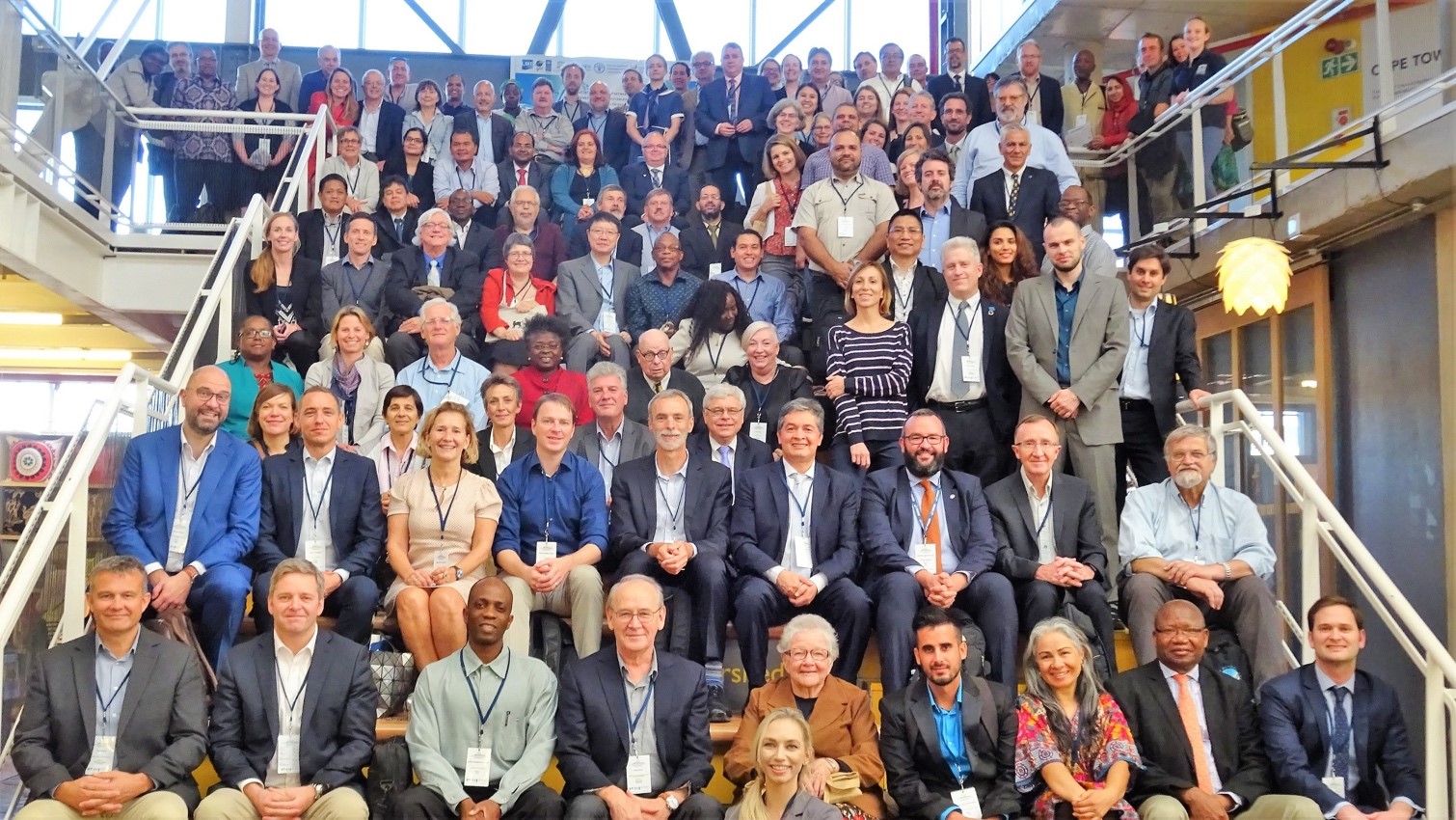
More than 130 participants attended the 2 events on “Building International Partnership to Enhance Science-Based Ecosystem Approaches in Support of Regional Ocean Governance” and “The 19th Annual Large Marine Ecosystem and Coastal Partners Meeting” organized by GEF, IOC, UNDP, UN Environment, and FAO in Cape Town, South Africa – 27 November – 1 December 2017.
-end-
Written by Andie Wibianto